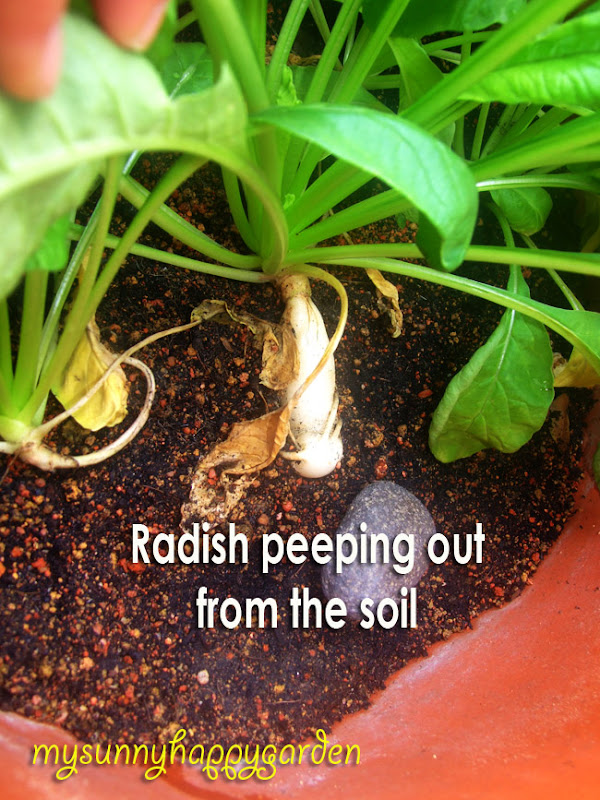
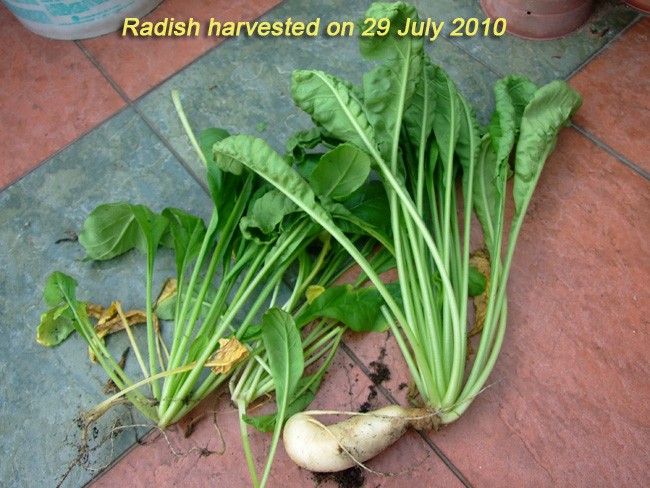
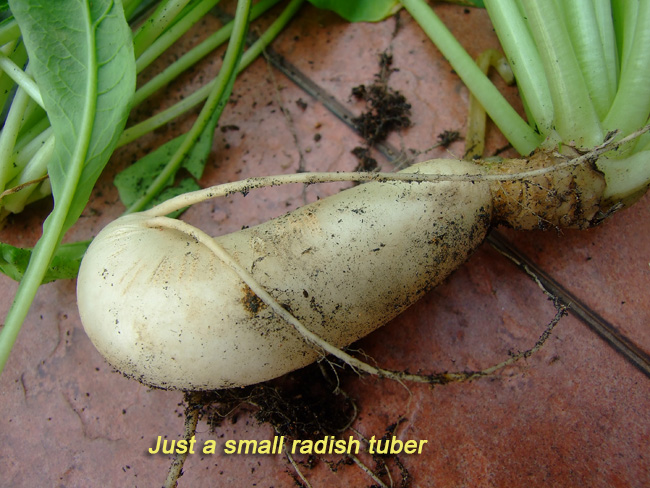
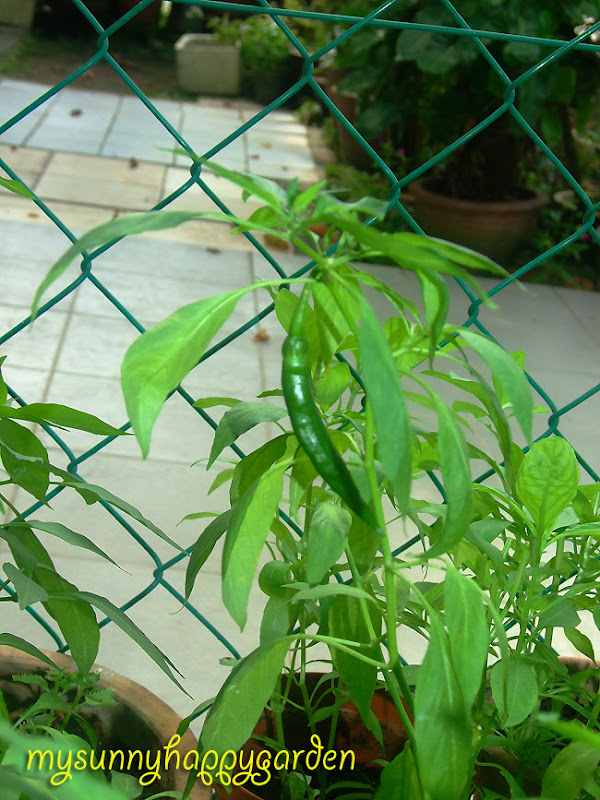
Today I harvested 2 radishes and 2 lady fingers from my garden. Ha ha...to seasoned vegetable grower, this is a pathetic harvest! But to me....whoa, they are fruits of my tender, loving, care!!

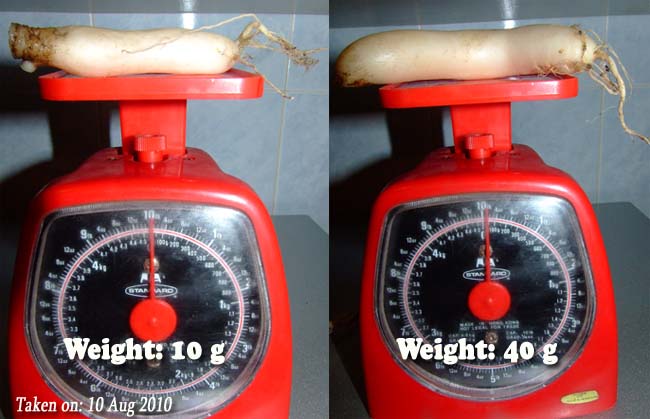
My radishes were really small in size. Compare them with the sizes of radishes grown by these children who are members of Earth Club in Japan who grew the Sakurajima Daikon. Their radishes weighed at least 900 grammes! Ha! Ha! I still have a long way to go to reach that size!!
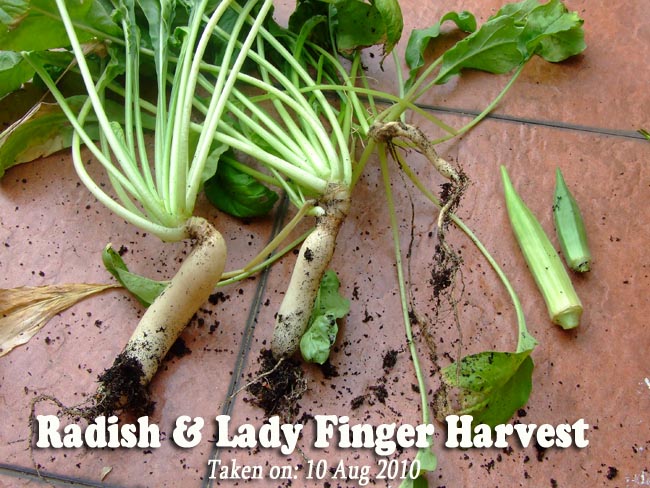
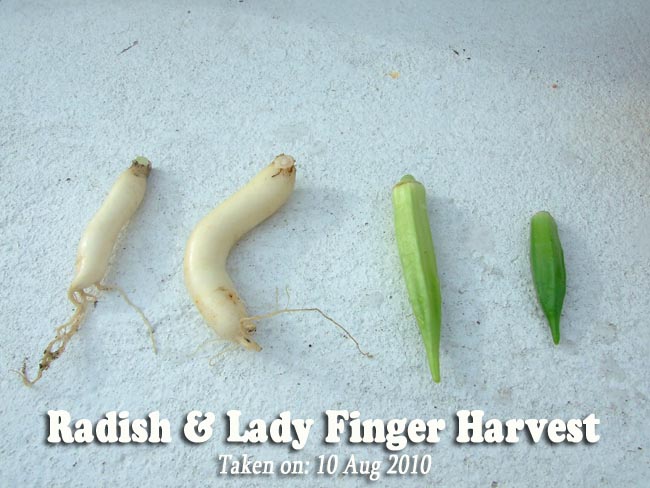
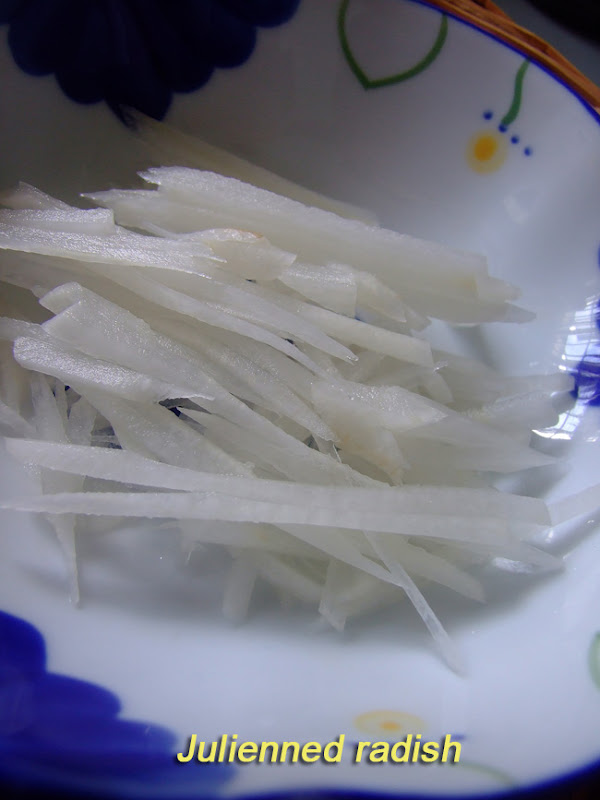
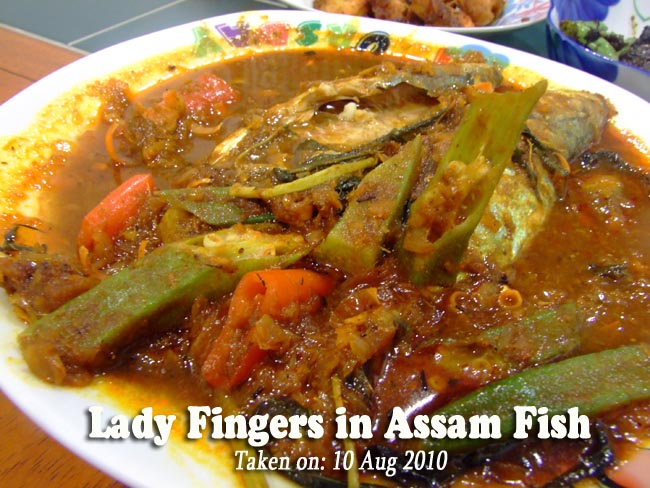
I have not decided what to cook with the radishes. The lady fingers were added into my Assam Fish for tonite's dinner. With the little harvest that I get, it needs a lot of creativity to use the vegie to produce a dish that is substantial for our dinner. Ha ha...my creativity is now getting challenges on a daily basis. Why do I say so? Because yesterday, I had harvested a solo lady finger! Yup, just 1 single lady finger.
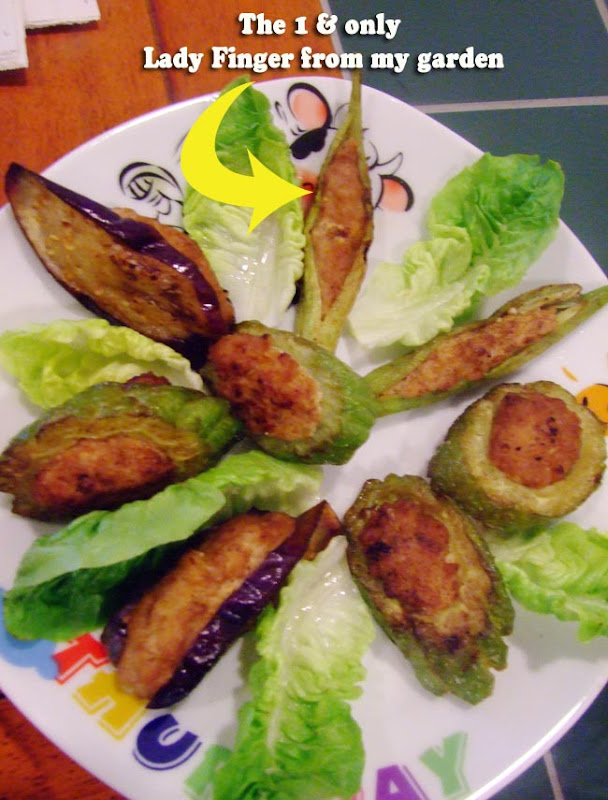
Yesterday's harvest of 1 lady finger was used in my Yong Tou Foo. I stuffed the lady finger with some minced meat and pan-fried them. As 1 lady finger is not sufficient to create a dish, I had added some other vegies, such as brinjal, bittergourd and another lady finger to add bulk to the dish. My sister said this is a delicious dish!
------------------------------------------------------------------------------------------------
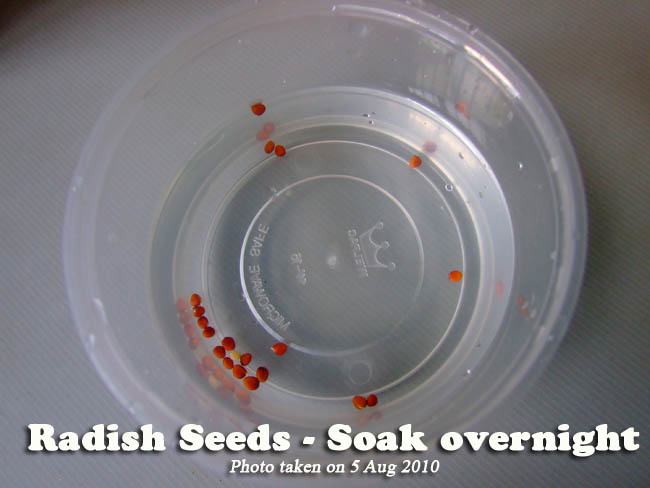
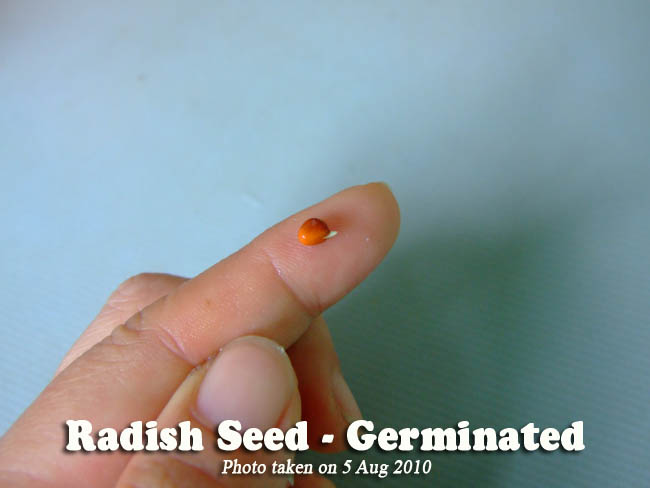
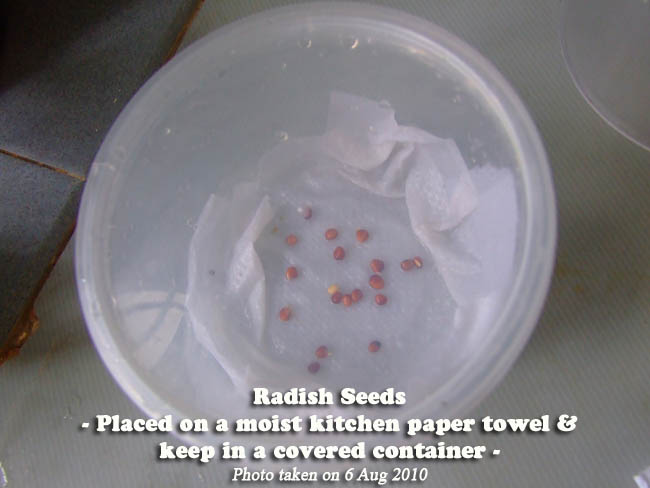
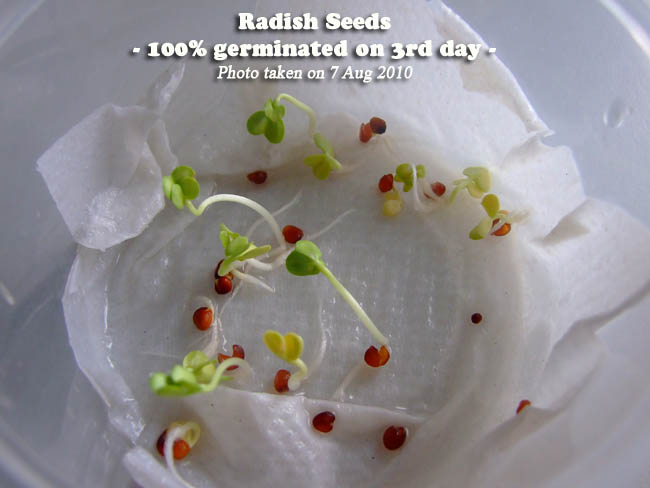
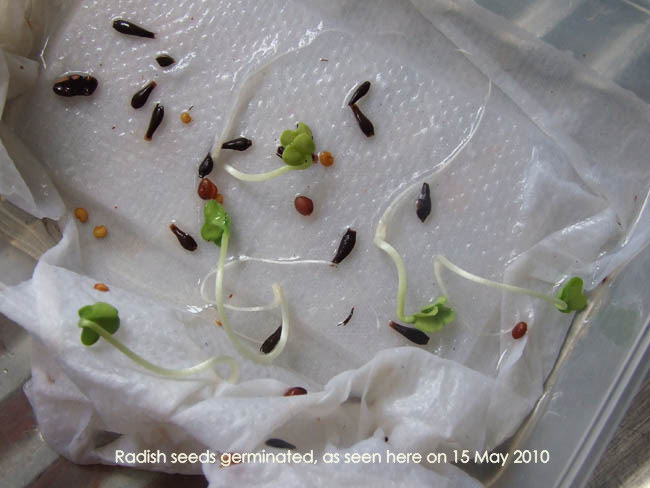
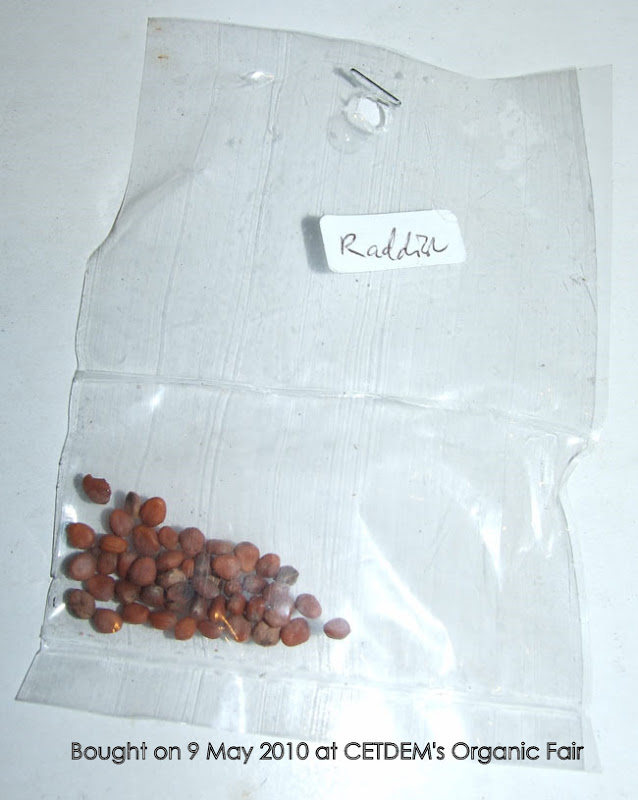
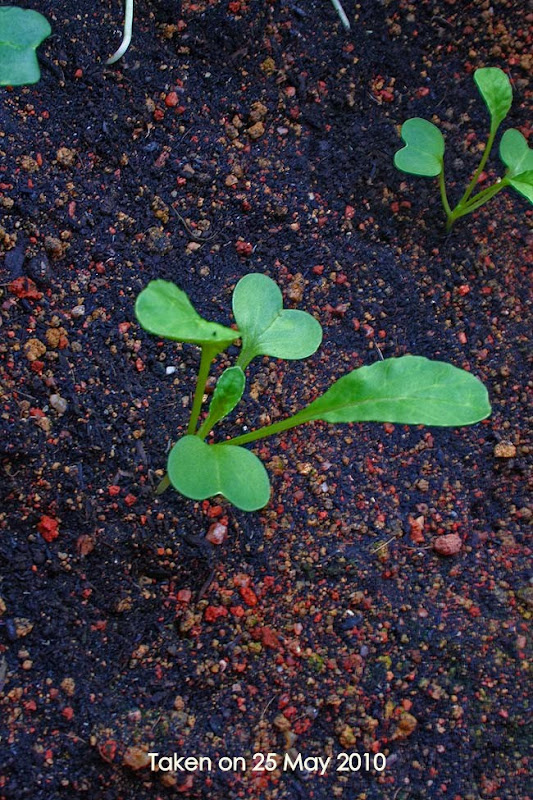
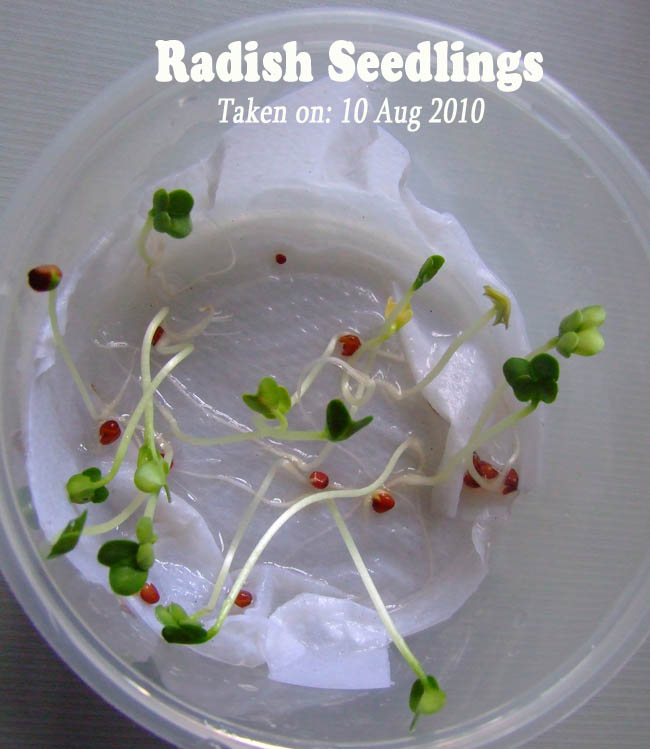
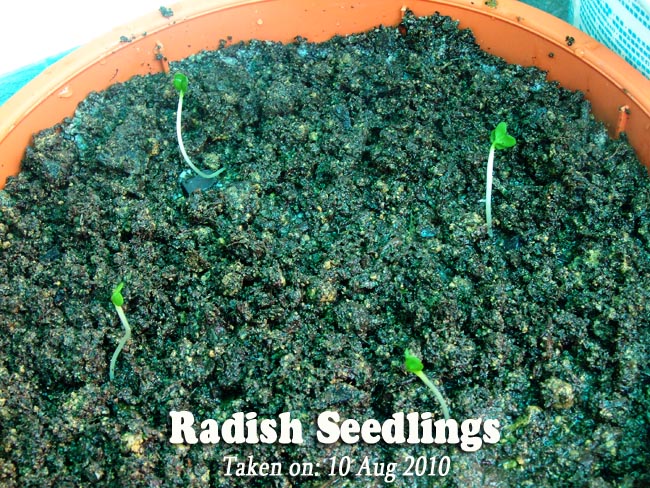
How's the radish seeds doing? All the seeds that I sowed in a plastic container 3 days ago have germinated into seedlings with 4 tiny leaves. Today I transferred them into pots.
Not satisfied with the sizes of radishes that I harvested, I did some internet search to find out how I can improve on its growth.
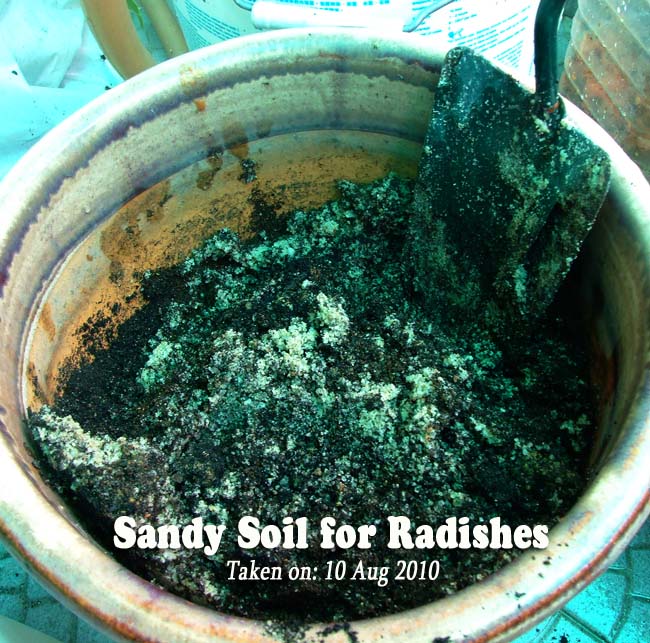
I found out that loose crumbly soil works best for white radish. So I have added some sands and also worm compost to the soil that I previously bought at the United Malaysian Orchid Nursery. My earlier crop of radish was grown in burnt paddy husks (sekam) mixed with cocopeat (habuk kelapa).
That was a crumbly composition that drains very well. But I have run our of them. Probably it's time to visit Sg. Buluh?? My dilemma is where shall I keep a gunny of burnt paddy husks and a gunny of cocopeat??
I also found out that the secret to good radishes is plenty of even moisture. Supply sufficient water to plants without creating waterlogged soil. If allowed to dry out, radishes will taste hot.
What fertilizer is suitable for radish? Organic or NPK chemical fertilizer?
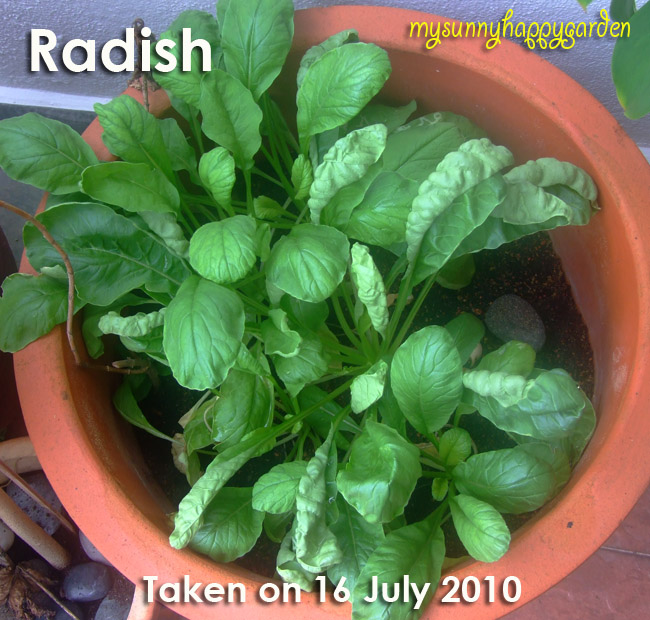
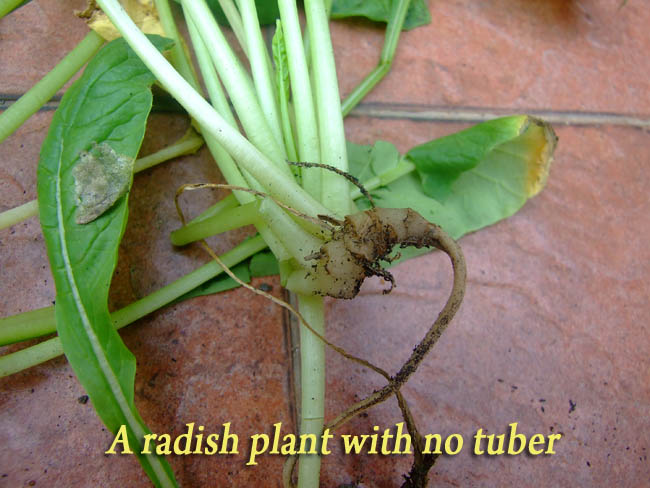
I have used organic fertilizer to grow my first batch of radish. According to the internet, many organic fertilizers have a higher concentration of nitrogen. Nitrogen increases leafy growth and root size during the initial growth stage of a radish. It also increases the rate of growth, allowing radishes to be harvested earlier. However, an excessive amount of nitrogen may cause leaf growth at the expense of root size. That explains why I have bushy radish leaves and stringy tubers.
Phosphorus stimulates root development and growth, which leads to a fleshier radish root. A lack of phosphorus in radish plants leads to stunted growth and poor yields.
Whereas, Potassium reduces water loss by the plant and reduces stress due to droughts. This is important for radishes, because excessive water loss and drought can cause the root to crack, resulting in stunted and poorly formed roots. Potassium also increases root growth, which results in larger radishes.
That means I will need Nitrogen (N) nutrient at the beginning stage of growing radish. That will follow by the increase of Phosphorus (P) and Potassium(K) when the plants are growing. How do I get more P & K nutrients if I would like to continue to use organic fertilizer??? (Mind boggling!)
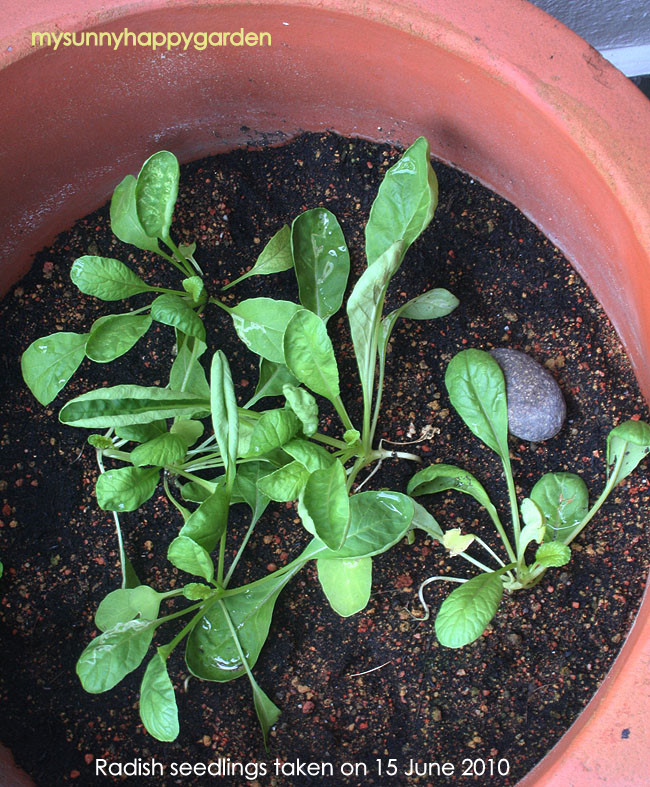
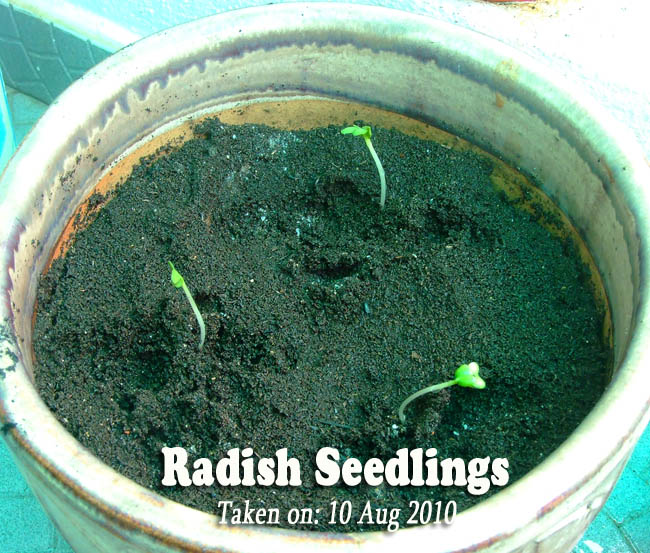
Seen here are the seedlings that I have transplanted on soil in several pots. I also need to get them into deeper pots if I want to have radishes with bigger tuber.
Some info on white radish, also known as Daikon:
The word Daikon actually comes from two Japanese words: dai (meaning large) and kon (meaning root). Daikon is is root vegetable said to have originated in the Mediterranean and brought to China for cultivation around 500 B.C. Roots are large, often 2 to 4 inches in diameter and 6 to 20 inches long. There are three distinct shapes - spherical, oblong and cylindrical.