
My plants have been persistently attacked by mealy bugs. They went for my YTT, Hibiscus, Roselle and also lady fingers.
The mealy bugs would usually be found hiding on the underside of leaves. They thrive under the shady leaves and multiply very fast. If not act upon quickly, they will suck away the life of the plants. They remind me of vampires! As a result, the leaves of plants would have brown spots or gradually turn yellowish. Eventually the leaves would drop off after their nutrients have all been sucked by the mealy bugs.
Some facts about mealy bugs:
Mealybugs damage plants by sucking sap from roots, tender leaves, petioles and fruit. They excrete honeydew on which sooty mould develops.
They excrete honeydew on which sooty mould develops. Severely infested leaves turn yellow and gradually dry. Severe attack can result in shedding of leaves and inflorescences, reduced fruit setting and shedding of young fruit. The foliage and fruit may become covered with sticky honeydew, which serve as a medium for the growth of sooty moulds.
Honeydew, sooty mould and waxy deposits may cover leaves reducing photosynthetic efficiency and may lead to leaf drop. Contamination of fruit with honeydew and with sooty mould reduces its market value. The honeydew attracts ants, which collect the honey and protect indirectly mealybugs from natural enemies. Some mealybugs inject toxic substances while feeding causing deformation of the plant (e.g. the cassava mealybug). Some species transmit viruses (e.g. the pineapple mealybug). (Source: Infonet-Biovision)
That was exactly what happened to my Roselle, as shown in picture below. What remains of my Roselle are only dried leaves & shrivalled branches with some recalcitrant mealy bugs still hanging on to them.
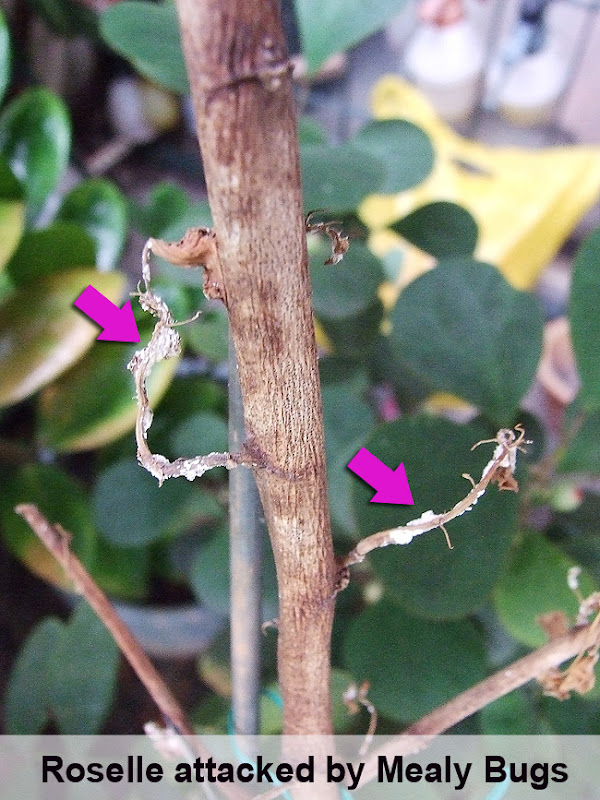
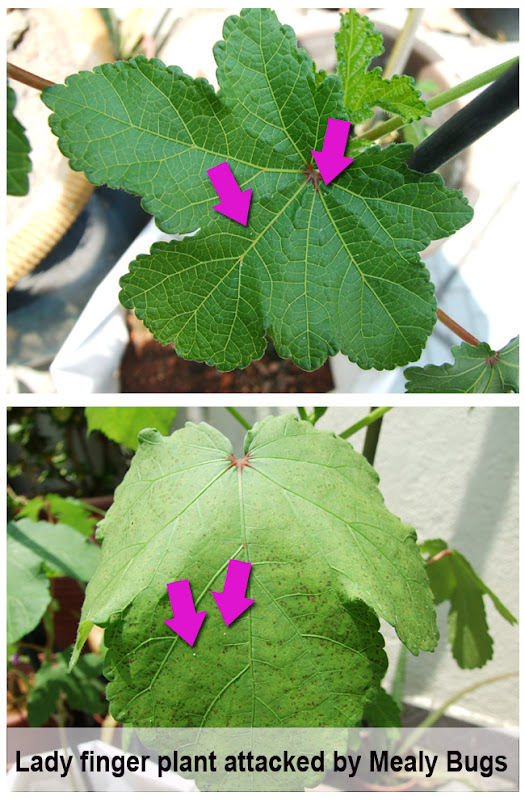
The little white spots that appear on leaves may be a sign of mealy bugs presence. They seem like harmless dust. Another sign of mealy bugs presence is ants! If you can see many ants crawling on your plants with white cottony spots appearing on your plants, most likely your plants have been invaded by mealy bugs. Act fast! If left for too long, a healthy plant will have brown spots like the second photo below showing my lady finger leaf with brown spots. Usually, I will wash off the mealy bugs with water. But this is not a lasting solution. The next day they would return again.
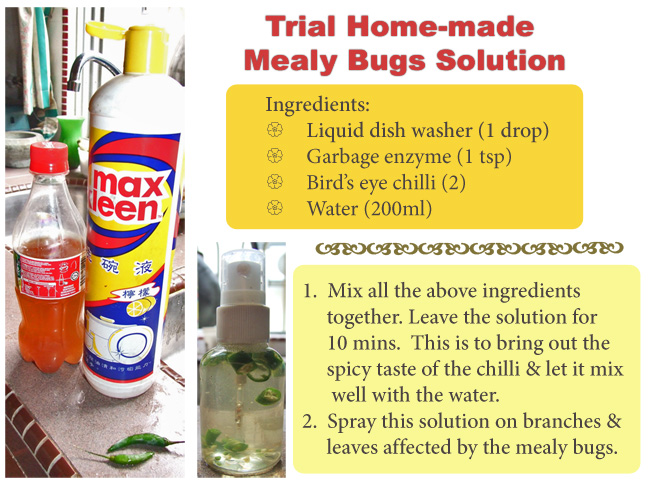
After reading TropicalGardening's blog and some other internet articles, I used the home-made solution below. This is still a trial formulation. I only made 200ml of this solution as they would be enough for one application. I prefer to make fresh new ones for each application. I sprayed them generously on the mealy bugs either early morning or late evening.
Please do not spray this solution when it's hot & sunny as the garbage enzyme may scorch the plants. A little garbage enzymes will go a long way. So do not use too much of it. If you do not have this, you can opt to exclude it.
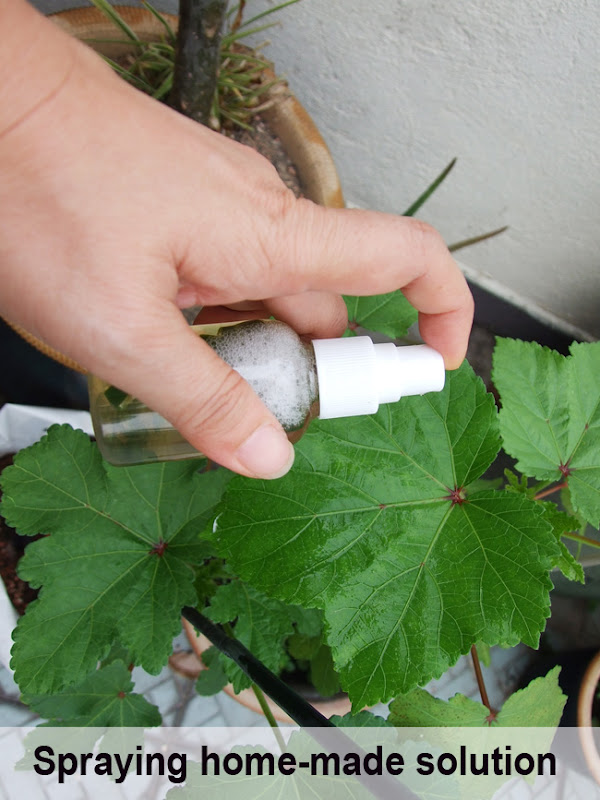
Be cautious when spraying this solution and ensure that the mixture does not come in contact with your skin or eyes. The spicy mist can hurt one's eyes & skin.
Stay a distance when spraying. The spiciness of bird's eye chilli will be emitted during spraying and can cause one to break into coughs.
Additional information that I found on the Internet:

