Showing posts with label friend. Show all posts

Monday, August 30, 2010

Am I Alone in This?

I have been away from my garden for 3 days. Now I wonder how my plants are doing. Can the radish seedlings survive the heat? Will it be raining in Subang Jaya, just like what we have in Melaka for the last 2 nights? Will my vegetables seeds be sprouting by the time I arrive home on Tues?

Is anyone of you out there like me? I mean worrying about your plants or the weather when you are away? I was so worried that I may not be able to find someone to help me water my plants when we will be away from home for 5 days. In the current heat that we are experiencing, we need to water the plants twice a day. So what am I to do if I am away for so many days?

Fortunately I brought this matter up to my close friend, Poh, who always helped me to water my plants when I am away. Unfortunately, this weekend, she is heading home to Johor Bahru, thus she can't help me. Poh brilliantly suggested another friend of ours, Krishna, who live on the same row of house as me. Fortunately, Krishna, said yes when I called her early Friday morning before I started my journey home to Melaka. Thanks Krishna for your helping hand, friend! You have helped me a lot!
Tuesday, June 29, 2010

New Shoot on Hydrangea

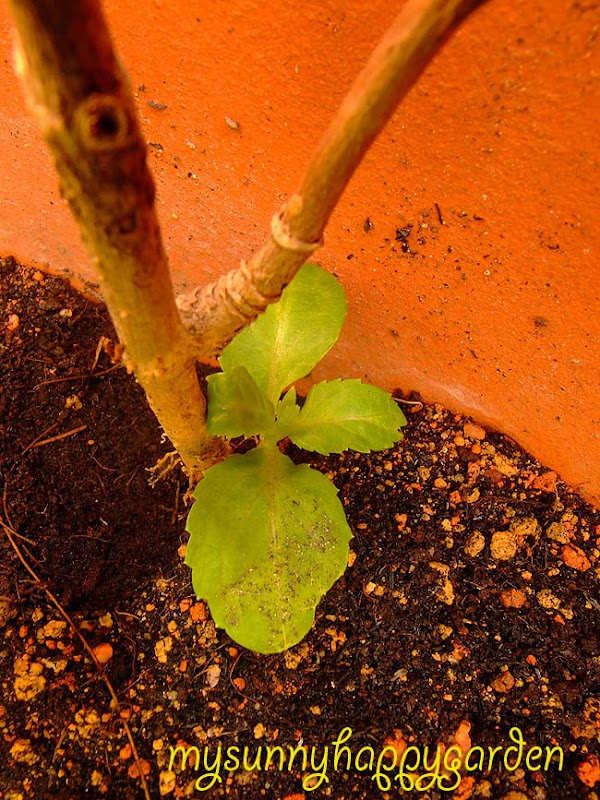
My friend, Aunt Poh Poh, gave me a Hydrangea cutting recently. The cutting dried up and the only thing left of it was a dried, hardened branch. As I didn't need the pot, I left the dried cutting in the soil.

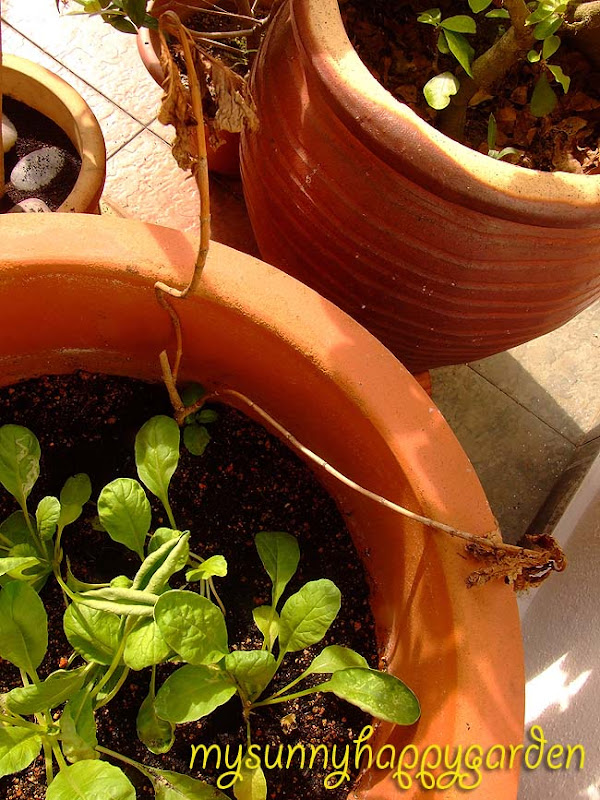
When I need to use the pot to grow radishes, I pulled out the dried cutting and found roots forming. Instead of throwing the cutting, I moved it to the side of the pot. I was amazed to find new shoot growing from it recently. Yahoo!! I will have a Hydrangea plant now! I am taking great care of the plant to ensure that it will develop well.


My Hydrangea is currently sharing a pot with my radishes.


----------------------------------------------------------
Facts about Hydrangea:

  • Soil

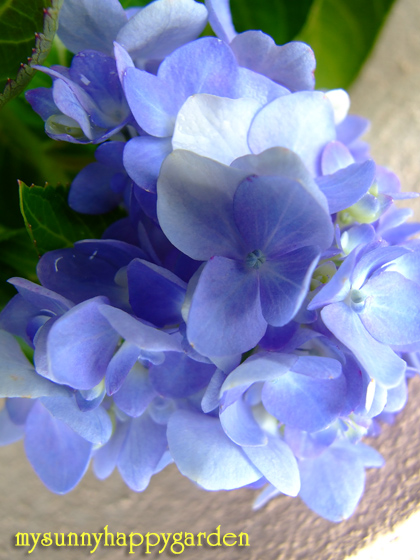
    One of the coolest aspects of hydrangea is the way soil affects the blooms. In acid soil the blooms are blue. When it's more limey, the flowers are pink. In neutral soil, the bloom is white. You can literally change the color by adding lime to make blue flowers turn pink or aluminum sulfate to make them turn blue. This is caused by a color change of the flower pigments in the presence of aluminium ions.


    Because hydrangeas thrive in rich, moist soils, adequate water and composting are a must. With good soil, annual additions of compost, and a good water retaining mulch, little more needs to be added to have healthy attractive plants.

    However, if your climate or soil poses challenges, then it may be necessary to more aggressively amend your soil, and feed them, especially in the spring, with a high quality all-purpose (10-10-10) plant food. Use a single application of time-release fertilizer.
    Drainage is important. As with most other plants, moist doesn't mean wet. Poor drainage can lead to sickly plants and eventual death.
  • Light

    Partial shade is ideal, but they can take full sun as long as they have some protection from hot afternoon sun that can toast leaf edges. By the same token, too much shade can result in poor flowering.

    An Eastern exposure next to a building or fence provides early morning sun that is vital to flower production, but allows afternoon shade that prevents stressing the plant and frying the foliage.
  • Water

    Water often. If hydrangea is looking wilted, it's very thirsty. If it doesn't get enough water when flower heads are forming, you'll have fewer and smaller blooms later.

    Install a drip irrigation system for your hydrangeas. With regular watering they will reward you with lush growth and beautiful flowers.
  • Pruning & Propagating

    As long as they get enough water, hydrangeas are pretty hardy plants and tolerate a fair amount of neglect and untimely pruning. As such, it's a wonderful plant for the novice gardener. Be forewarned though: If you prune incorrectly at the wrong time or take the wrong cuts, you may easily end up with few flowers next year.

    Hydrangeas, especially the macrophyllas, don't require pruning unless they get really big. Remove dead wood and spent blooms any time to maintain a tidy plant. Different varieties bloom on old wood (last year's growth) or new wood from the current season. It's important to check the plant tag or identify your variety before you start whacking away. If, for example, yours blooms on the tips of spring growth, do your pruning in the summer after blooming has occurred.

    Prune or cut back spent blooms to force development of next year's buds. Thin canes on your plant to develop larger flower heads.

    Hydrangeas are easy to root from stem or tip cuttings in late spring or early summer (May – June). Just take a 6-inch cutting of the plant, remove the leaves on the lower 3 inches and put it in a glass of water on a bright window sill. You can also dip the cut end into a rooting hormone. Place your cutting in damp vermiculite in a bright spot (like an Eastern exposure) to allow root formation. Once the cutting is rooted, you can keep it in a pot until ready to transplant outside.

    When you plant your hydrangea starts depends on where you live. In areas where winters are temperate and the ground never really freezes you can plant your hydrangeas anytime, though fall and winter are best for fostering a strong root system to support the next seasons flowering. If your climate is colder, you'll need to plant in the spring ... for obvious reasons. Keep your young plant in out of the wind. Mulch it well to protect it through the winter.

    (Source: Hydrangea Care)

Wednesday, May 12, 2010

Featured Garden: LP's Pictorial Garden

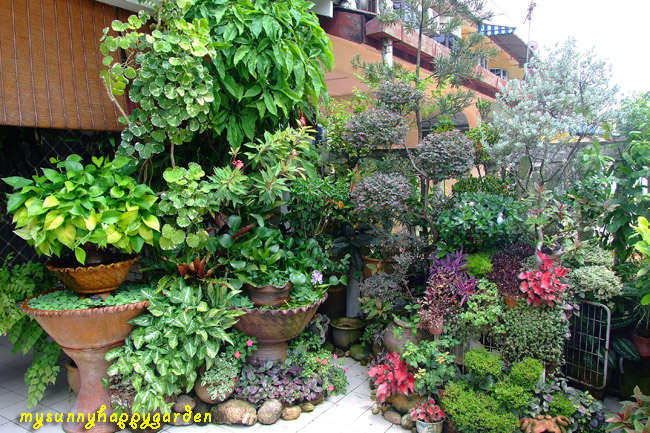
Today I am going to post about the garden of a closeby neighbour, named LP. LP has a lovely, cosy garden. Just like the pretty owner herself, the garden always make passer-bys turn their heads. It's hard not to take another peep to admire the garden.

After reading about pictorial gardening, I conclude that LP is a pictorial gardener. Why so?

The pictorial gardener is primarily interested in the outline of the tree, the density or solidity of its foliage, its blending faculty, either as a group or in company with other trees, and its color value in relation to other darker or lighter shaded trees.


As pictorial gardeners we broaden our garden horizon. As producers of flowers, the edge of our flower beds or the lot boundary plantation represent all too often the limit of our garden horizon. As painters of garden pictures we extend our vision and include on our canvas that part of the picture already painted by nature. This is especially so in the open country where a distant hillside, a lake or river view, may be made visionally part of our garden picture even though these areas be far beyond
the boundaries described by our deed.


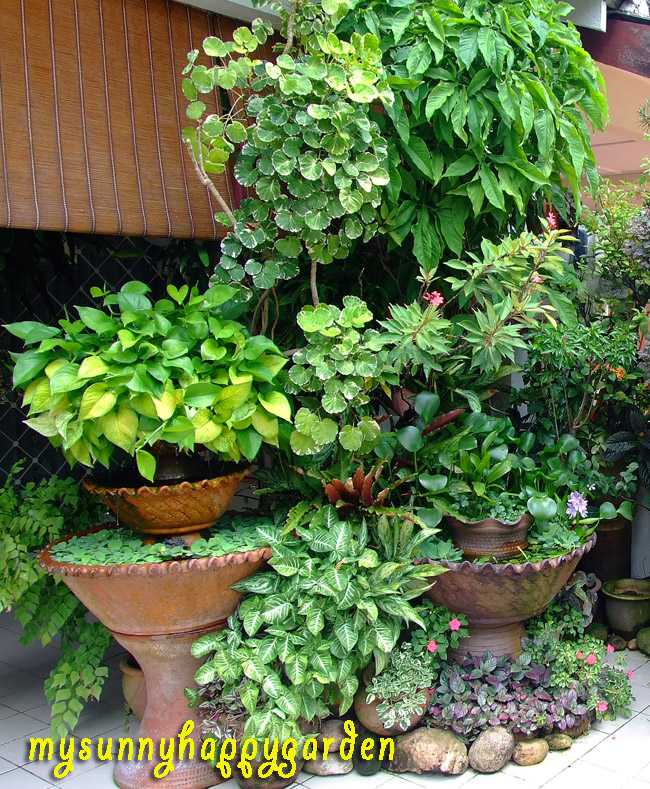
LP's garden comes with a huge collection of foliage in various colours and patterns. The lush greens are dotted with spots of pink, red & purple colours from the few flowering plants she grows. She makes a beautiful vista of her garden by creatively arranged her lush plants in clay pots that comes in various heights and beautifuly displayed with a visual perspective effect in mind. Taller plants form a background for the smaller, dainty ones. River rocks are placed on the foreground to create an attractive border. Viewing her garden, one would know that the owner has put a lot of thoughts into the composition of this beautiful paradise, just like how an artist would plan before painting his brush on a canvas.


In the foreground, there are Goose Foot & Snow Queen (Aglaonema) plant with interesting leaves and a few varieties of folige plants (do help me to figure out their names). I think the flowering plant is an Impatiens.

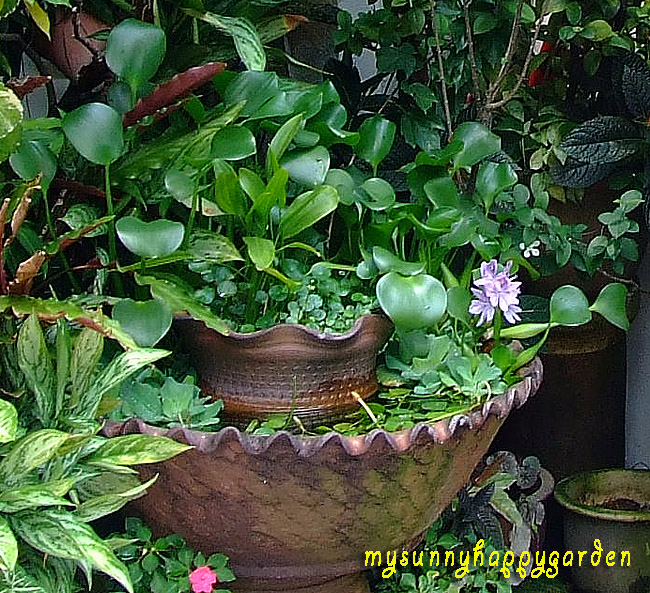
Placed in the 2 bigger pots are water plants, featuring the purple blooming Hyacinth & Pegaga in one pot and the 2nd pot containing Money Plant (Devil's Ivy) and Water Lettuce.

The tall Polycias with its round, variegated leaves together with the Goose Foot plant are strategically placed as background for the water features. At the same time they help to block passer-bys from viewing into the living room, thus, providing privacy to the home owner.


A close-up view of the pot containing the Hyacinth bloom & Pegaga. Also seen is the Snow Queen (Aglaonema) plant on the left and the blooming pink Impatien.

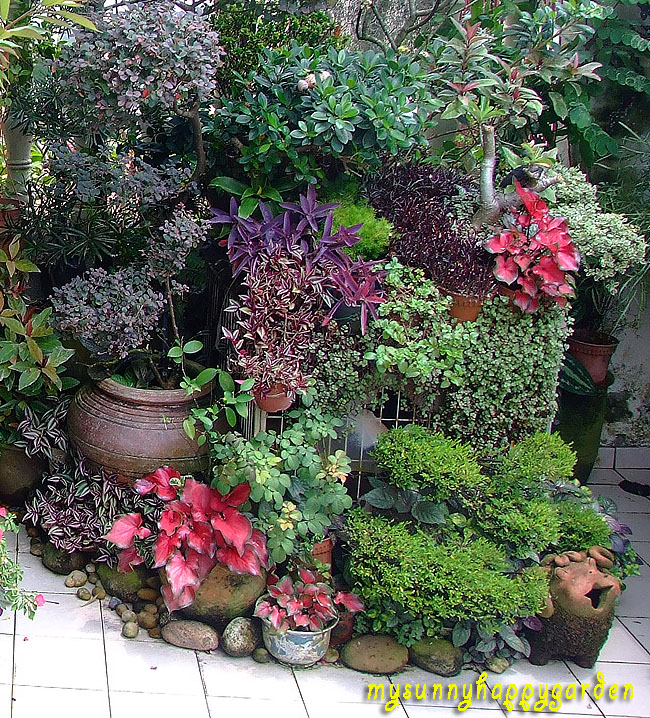
On this nook, LP placed many foliages of various leaf sizes and colours. I like that plant with the fiery red leaves. It brightens up the whole section. The tall plants are cut into topiary, providing shades for the smaller plants placed in hanging pots. The tall plants together with the small creeping plants provide shades to LP's dog cage. This is also a creative way to decorate the dog cage.

An overview of this section of LP's cosy garden.

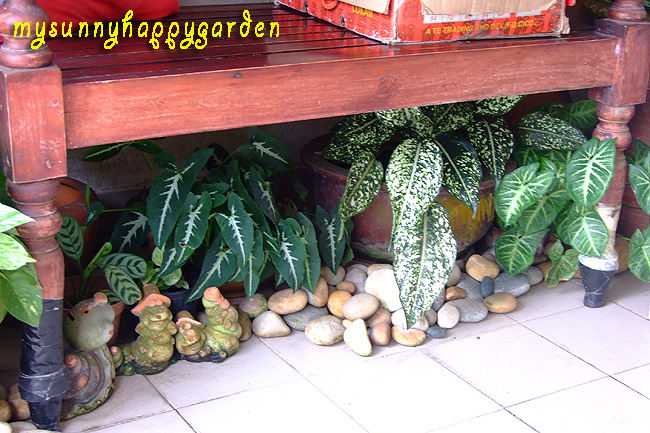
Due to limitation of space, plants that require shades are placed under this wooden bench. I love these collection of plants that come in different shapes & patterns with different shades of green on their leaves. Adorable clay snails and turtles are used as decoration.

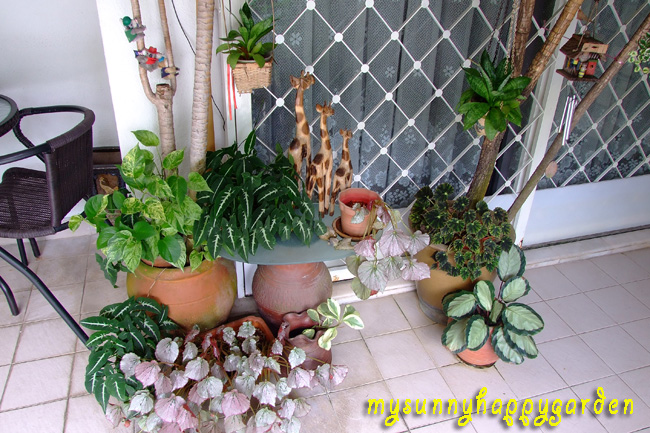
Besides her garden furniture, a piece of glass is placed on top of a pot to form a small table for a pot of Begonia with velvety leaves and a heart-shaped foliage plant. They are joined by the 3 wooden giraffes of different height. A wind chime is hung on her Cane Plant, adding soothing effect on a windy day to this charming corner.


LP's garden is an inspiration to me. Everytime I drove past her house, I would slow down to get a good view on how the garden is doing. I wish my garden would one day be as picturesque as hers!

Wednesday, September 30, 2009

Surprise in the Mail Box

I found a surprise in the mailbox today! It's a big brown envelope and at the back it was written that it is from Kak Dah of My Little Vegetable Garden blog.

A few weeks ago, Bang Chik (Kak Dah's hubby) has posted on their blog that they are giving away roselles seeds. Anyone interested, can email them with details. I am so happy to receive this gift from these two fellow gardening bloggers. It's my very first gift from our circle of gardening enthusiasts. Thank you very much, Kak Dah & Bang Chik!

First, I found this big brown envelope in my mail box.

In it is this beautiful Raya packet.


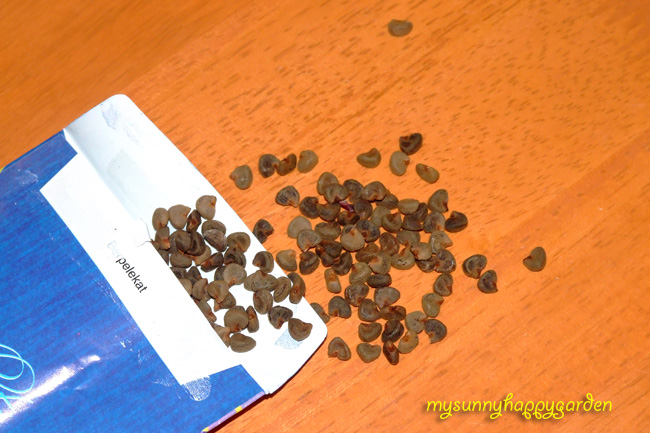
Inside the Raya packet, there are so many Roselle seeds!!!
Wow, I really feel abundance!!!
Thank you, Kak Dah & BangChik!

Tuesday, June 2, 2009

Susan's Enchanting Garden (Part 3)

This would be my last posting of Susan's Enchanting Garden.


A DIY water feature in Susan's garden


Gravel is added to this section to create a simple rock garden.


I like this flower but I don't know the name. There were many tiny blooms.


Added on 3 June 2009: this flower is called Plumbago.


Eastern Flower

Ginger Flower


Monday, June 1, 2009

Susan's Enchanting Garden (Part 2)

I have more beautiful shots of Susan's garden to share with all of you here.


Bright red Anthurium


Beautiful Hydrangeas


I don't know the name of this plant with beautiful rosy bloom.

A beautiful colored leafy plant


Pegaga


A corner of the garden lined up with various types of green plants


Some more adorable ornaments in Susan's garden


Using a hanging basket to place the bird's nest plant and decorating it with 2 cute ornaments show the creativity that Susan has in adding a touch of cosiness to her garden

Friday, May 29, 2009

Susan's Enchanting Garden

My neighbour, Susan, invited us over to her house for Melaka Satay Celup Steamboat. It was a fun lunch gathering for friends. Her lovely garden was a comfortable place for us to hang out over a cup of coffee and tea. It is such a cosy garden that displays Susan's creativity and love for gardening.

Have fun walking through Susan's cozy garden, my friends!


A sign welcoming visitors to her garden.


My friends having a chill-out session under the cozy porch area.


A friendly face greeting visitors.


A beautiful pink bloom swaying away under the glorious sunshine.


I don't know the name of this plant.
Seems to me like a kind of bird of paradise or heliconia.


A water feature with some cute decorative ornaments.


More photos of Susan's garden will be shared with all of you in the next two postings. There are so many nice things to photograph in her garden, that's why I have a lot to share with all of you!

Tuesday, May 19, 2009

Beautiful Leaves of Calladium


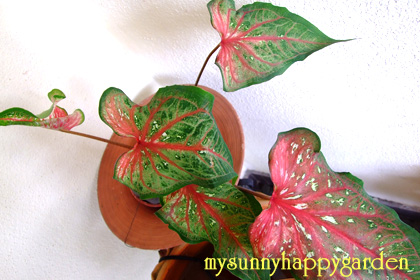
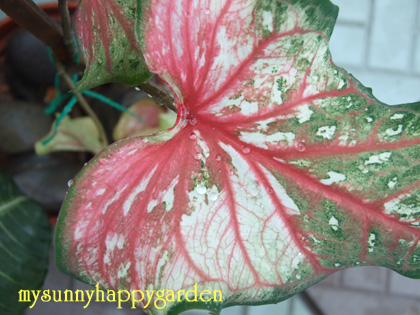
This is the Calladium that my friend, Poh, gave to me together with another beautiful fern that I have posted earlier.


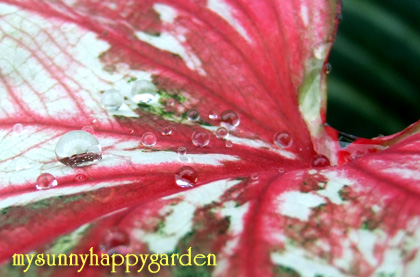
The first photo was taken when I first received the plant. You can see that the leaves are greener and fresh. But after 3 weeks, the plant has more white colour on it. I put the Calladium in the porch area, away from direct sun. Warmth and moisture are considered two of the Caladiums best friends. They need both to flourish. I tried to incorporate both. Sometimes I would bring the pot outside when there is sunshine, but usually they would be placed under bigger plants. Not direct sun, but just for it to get some heat. However, I realized they are not getting any better than when I first receive this plant. I am crossing my fingers that they would grow well. I love this Calladium. They have such attractive leaves!!

Aren't they beautiful?

Tuesday, May 12, 2009

Beautiful Fern from A Friend


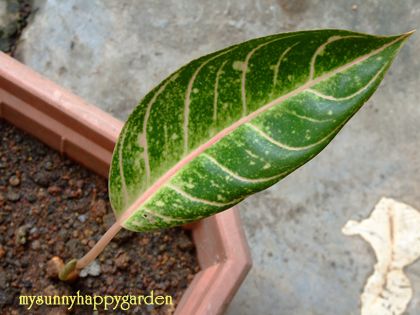
I received this beautiful plant from my friend, Poh, recently. I like the beautiful colours on its leave. I hope it would grow healthily under my tender, loving, care!


My friend, Poh, doesn't believe in buying plants. She said her garden grows from the plants she got from her brothers, sisters, neighbours and friends. She believes in exchanging plants with others rather than buying them. She generously gave me a few other plants to grow in my garden! Thanks, Auntie Poh Poh!

LinkWithin

Related Posts Widget for Blogs by LinkWithin
Custom Search