Showing posts with label herbs. Show all posts

Friday, August 13, 2010

A Herb by Any Other Name....

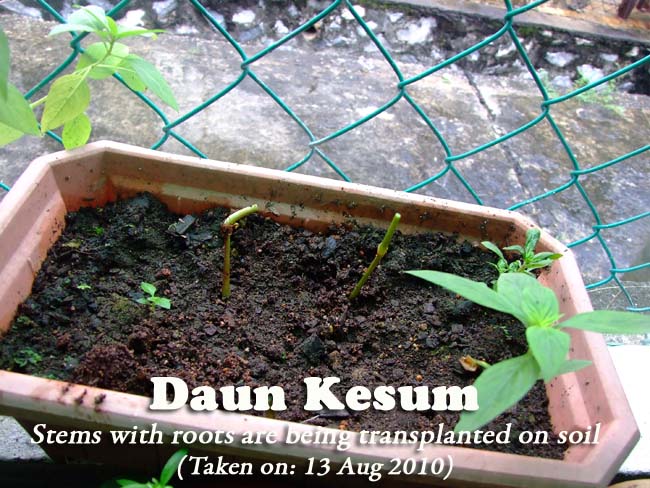
Daun kesum or Daun Laksa or Vietnamese Mint or Polygonum are the variety of names used for this herb. Regardless of what name it uses, I can't have my Assam Fish or Laksa without this fragrant herb. It enhances the flavour of the dish.

Three days ago, I bought some daun kesum for cooking the Assam Fish dish. My next door neighbour, has a pot of healthy daun kesum. She told me to pluck them as and when I need them. However, that day when I called her from my backyard, she couldn't hear me. I wanted to ask her for some daun kesum. Since I have just moved to this neighbourhood recently, I am a bit uncomfortable to call out too loud and also in case I awaken her from her nap. Alas, I got some daun kesum from the mini market nearby.

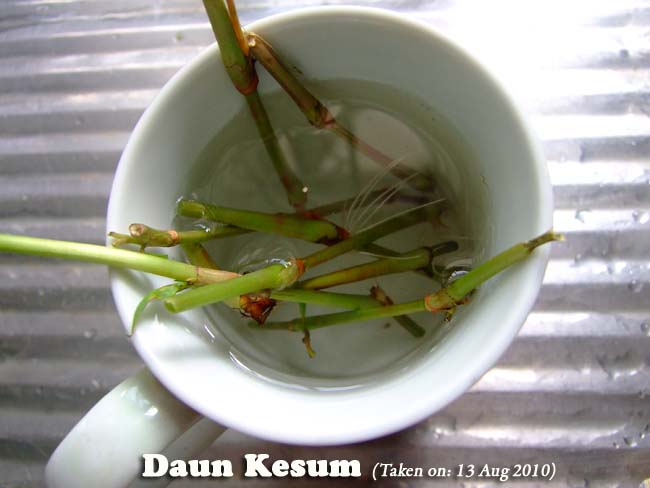
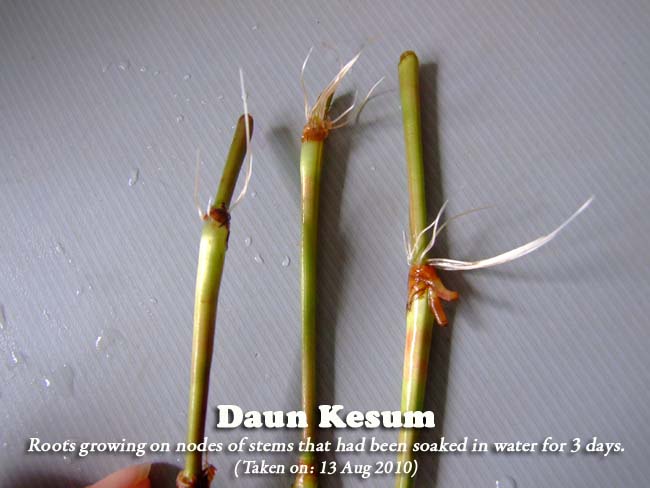
I kept some of the stems from the daun kesum and placed them in a cup of water. After 3 days, some roots have grown from the nodes of the stems. Today I placed 3 stems into the soil to grow. From the internet, I learnt that daun kesum needs plenty of sunlight and it is best to keep the soil moist at all time. Organik fertilizer can be added fortnightly. With good care and enough water, I would see shoots growing in a week. Wow, I am looking forward to that!
Saturday, August 15, 2009

New Plants for My Garden

From the Putrajaya Floria Fest 2009, I have bought some new plants for my garden. It's hard to resist shopping for new plants. But I can't help it coz I have been eyeing these plants for sometime and eventually I gave in to my 'WANTS', as Oprah Winfrey puts it (versus one's NEEDS).

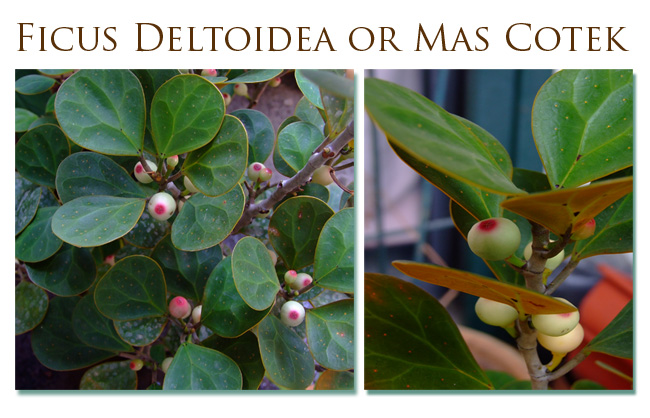
My first purchase is a plant that we locally called Mas Cotek. Scientifically it is known as Ficus Deltoidea. What struck me when I first saw it in Shah Alam's Farmers Market was the ornamental fruits on this plant. They look so beautiful. The plant was sold at the price of RM35 at the Farmers Market. Fortunately I got this pot at RM10. The price was a good bargain and you know me, I have done my research before I finally paid for it.

I was told by the vendor that the whole Mas Cotek plant can be consumed for health purpose. Boil the cleaned & sun-dried leaf, stem and root with water. Consume it. This helps for diabetic patient. From the Wikipedia, I found more usage of this herbs:

Mas Cotek is a small perennial herb, growing up to about 2m tall. The different shapes of the leaves represent different varieties some having a rounded shape and others having an elongated egg shape. The color at the top of the leaf is shining green while underneath, the surface color is golden yellow with black spots in between the leaf veins. Mas Cotek plant species are male and female. The leaves of female species are big and round in shape, while the male species are small, round and long in shape.Mas Cotek plants grow wild in eastern Peninsular Malaysia and it is popular among traditional medical practitioners. The trees can be found in the jungle in Kelantan, Terengganu, Sabah, Sarawak and Kalimantan.


Mas Cotek, also known as "mistletoe fig", has been scientifically researched by two local institutions, the University of Malaya and the Malaysian Planting Research Institute (MARDI). Research results show that Mas Cotek possesses five (5) active components which are required by the human body, namely flavonoids, tannins, triterpenoids, proanthocyanins and phenols. These active components have been shown to assist in human memory and are used by doctors to treat patients with disabilities in concentration.


Traditionally used as a postpartum treatment to help in contracting the muscles of the uterus and in the healing of the uterus and vaginal canal, it is also used as a libido booster by both men and women. The leaves of male and female plants are mixed in specific proportions to be taken as an aphrodisiac. Among the traditional practices, Mas Cotek has been used for regulating blood pressure, increasing and recovering sexual desire, womb contraction after delivery, reducing cholesterol, reducing blood sugar level, treatment of migraines, toxin removal, delay menopause, nausea, joints pains, piles pain and improving blood circulation.


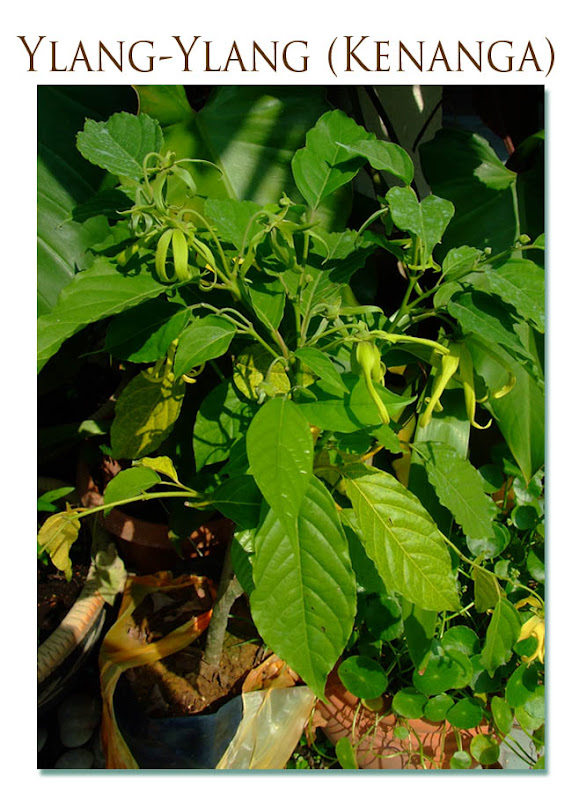
The 2nd plant that I bought is a grafted Ylang-Ylang, also known as perfume tree. The ylang-ylang (pronounced ee-lang ee-lang) is a medium to large sized tree producing yellow flowers with long trailing petals and a strong aromatic scent. The sweet smelling flowers are used in perfumes, such as Chanel No. 5.

A Ylang-Ylang germinated from seeds can grow to be a tall tree as tall as 60 feet high. But grafted ones will remain as a small tree or shrub (see Ylang-Ylang at Alokarama) that grows up to 6 ft. tall and it starts blooming when the plant is only 1 to 1½ feet tall. That's why I choose the grafted plant.


Some more information about Ylang-Ylang that I found on the internet:


The Ylang-Ylang cultivation requires:


Light: Provide full sun to ensure better flowering.

Water & Humidity: Water the Ylang-Ylang plant daily for the first 2-3 weeks after you plant it. Then regular sprinkler irrigation will be sufficient. Cananga is a rainforest tropical tree that thrives best in a high-humidity environment.

Fertilization: Fertilize the plant with one-half dose of blooming-grade balanced fertilizer at least once a month during the growth period to encourage blooming.

Pests: The tree is practically pest-free. No special treatments are usually required to keep it healthy.

Sometimes, creative gardeners who lack room in their gardens train the plant into a shrub. Such a compact Ylang-Ylang will still provide wonderful perfumed flowers year round. The procedure must be started as early as on 8-10 inch seedling by pinching the very top point of growth. Don't wait until the seedling becomes too woody, or when you plant in the ground, the tree will sprout up a long stem. If done in time, trimming can create a nice shrubby look.


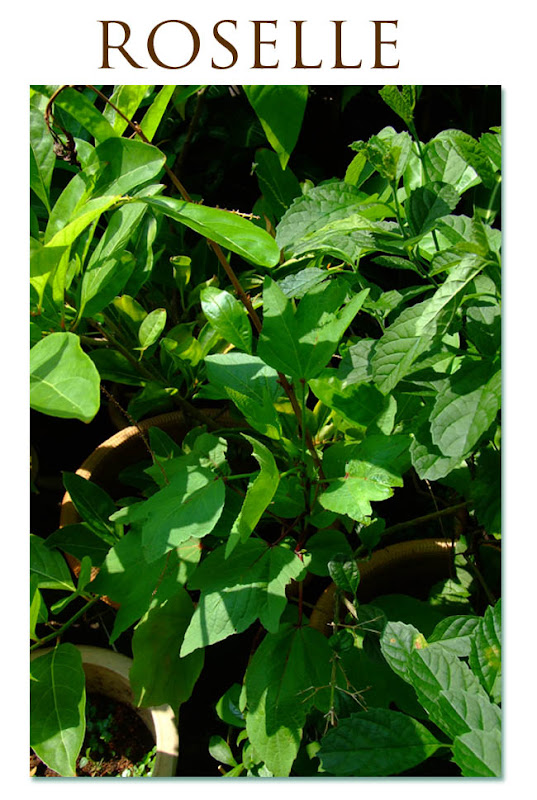
The last plant that I got was a Roselle. After reading about Roselle from the other fellow bloggers site, I am very tempted to plant it.

Roselle is also known as Hibiscus Sabdariffa. Roselle is usually propagated by seed but grows readily from cuttings. The latter method results in shorter plants. The plant prefers a permeable soil, preferable light (sandy), medium (loamy) and heavy (clay) soils with humus rich fertile and well-drained soil. The plant prefers acid, neutral and basic (alkaline) soils. However, it will adapt to a variety of soils. It cannot grow in the shade and must be kept weed-free. It requires moist soil. It will tolerate floods, heavy winds or stagnant water.


The fresh calyx (the deep red outer whole of the flower) can be eaten raw in salads, or cooked and used in making jellies, soups, sauces, pickles, puddings. The calyx is rich in citric acid and pectin and so is useful for making jams & jellies. It is also used to add a red colour and to flavour to herb teas (Sudan Tea), and can be roasted and used as a coffee substitute. A refreshing and very popular beverage can be made by boiling the calyx, sweetening it with brown sugar. See BangChik & Kak Dah's My Little Vegetable Garden for their roselle plants.


My aplogies for the loooooooong posting today. As I researched for information on these plants that I newly acquired, I thought it would be good to share the information here with all.

Monday, May 25, 2009

Indian Borage


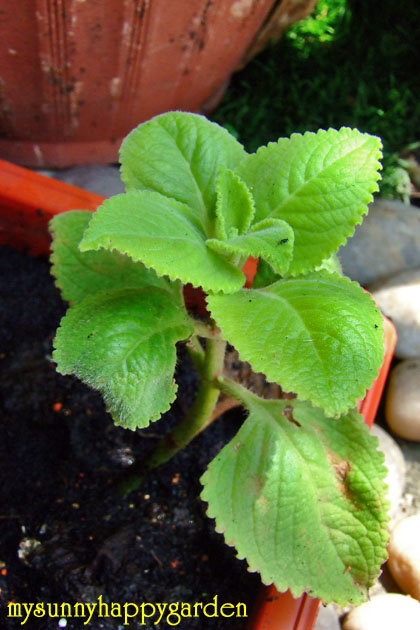
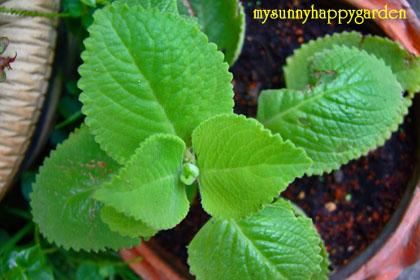
My friend, Rox, has given me an Indian Borage (she mistakenly called it "Apple Mint) stem cut to grow my own. Like Rox, many has mistaken the Indian Borage plant with mint as it smells like one, but with stronger smell. The leaf also look similar to mint, only that it's bigger and have some fine hair on it.

On Saturday, I can feel a sore throat ws coming down on me. My friends and I had a feast of 'keropok lekor' the night before at our cell group meeting. I remembered Rox told me that the Indian Borage works wonders as remedy for cough and sore throat. Though I am afraid of taking herbs raw (especially bitter ones), I put a piece of freshly plucked Indian Borage leaf into my mouth and chew on it.

The minty smell was strong, then there was a tinge of bitterness, followed by a sweet flavour at the end of the throat as the leaf was swallowed. Miraculously, the symptom of sore throat vanished! You can give the Indian Borage a try too if you have a sore throat and cough.


It is said that Indian Borage can be used for culinary purpose too. However, I have not find out in what dishes can it be used yet.

I hope to propagate more Indian Borage and share it with my friends. I just gave one to my neighbour, Letchumi and she was so glad to receive it. I hope I could spread more joy through my garden to friends and neighbours.


Growing the Indian Borage at Home
===========================

Marlene_OntheWall shared this information on how to grow Indian Borage:

The easiest way to propagate the Indian Borage is to use stem cuttings (Seeds can also be used, where available).

Cut a length of the central stem. Each segment should be approximately 5-8 inches and have several nodes. Remove the leaves from the bottom two to three nodes and insert into the soil.

It's important to make sure your pot has good drainage. Ideally, the soil should be moist. Take care not to overwater as this plant does not like wet conditions.

If you live in the tropical or subtropical areas, place the plant in semi-shade. If the amount of sun is right, the leaves should be a nice jade-green. If it is getting too much sun, the leaves turn yellow and start curling; not enough sun, and the leaves turn a dark shade of green.

In cooler regions, the plant can be placed in full sun. As it is susceptible to frost, you may want to grow it in a pot which can be moved indoors or to more sheltered areas during winter.

Tuesday, May 5, 2009

Sawtooth Coriander


I got 2 small Sawtooth Coriander plants from Alokarama. I am trying to grow them in the garden. I am not sure how they propagate but I hope they would grow well.

If you see the leaves of the plant, you will see its serrated edges that looks similar to a saw. Hence, the name Sawtooth Coriander.

While in Alokarama, we were introduced to this herb that has a similar taste to coriander. We sliced the herbs thinly and put it into our nasi ulam. I like its crunchiness and coriandeer-like fragrant. A good substitute for coriander if you don't have any in the fridge.

Have you tasted the Sawtooth Coriander before?

Tuesday, April 28, 2009

Green Thumb Workshop @ Alokarama (25-26 Apr 2009)

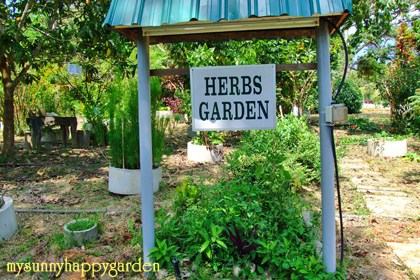
The herbs garden at Alokarama.


I am back from the Green Thumb Workshop in Alokarama retreat centre in Asahan, Melaka.

Unfortunately, the soil specialist who were supposed to speak on soil improvement didn't make it to the workshop. However, we still had a good time working in the herbs garden (as seen in the above photo) ~ weeding, pruning and harvesting.

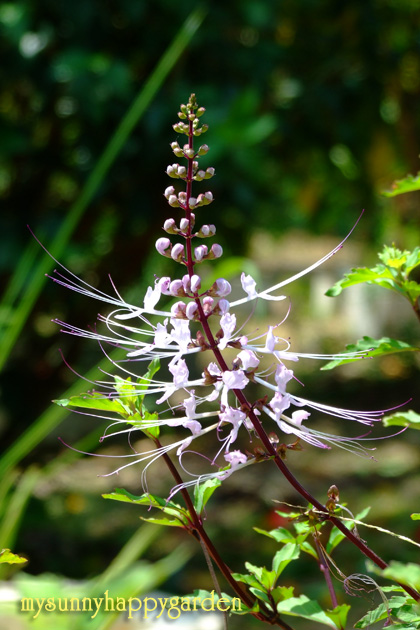
We also learnt the various benefits of the variety of herbs planted there. There are so many herbs and it would take me a very long time to learn them. We also used the harvested herb i.e. misai kucing, lemon grass and pandan leaves to boil tea with them. In preparation of our meals, we also used various herbs to prepare our meals, e.g. sawtooth coriander for nasi ulam, cili padi and limes as condiment and lemon grass for assam pedas. It was so fun to cook while in Alokarama as those herbs are easily available as they are also planted just outside the kitchen area.

There are so many fruit trees (durian, papaya, jackfruit, duku langsat, mulberry), flowers (birds of paradise, ylang ylang, kerak nasi, jasmine & etc), herbs, leafy & aquatic plants (lotus & waterlily) in the Alokarama's orchard. I will try to share them here with all of you in the next few days.

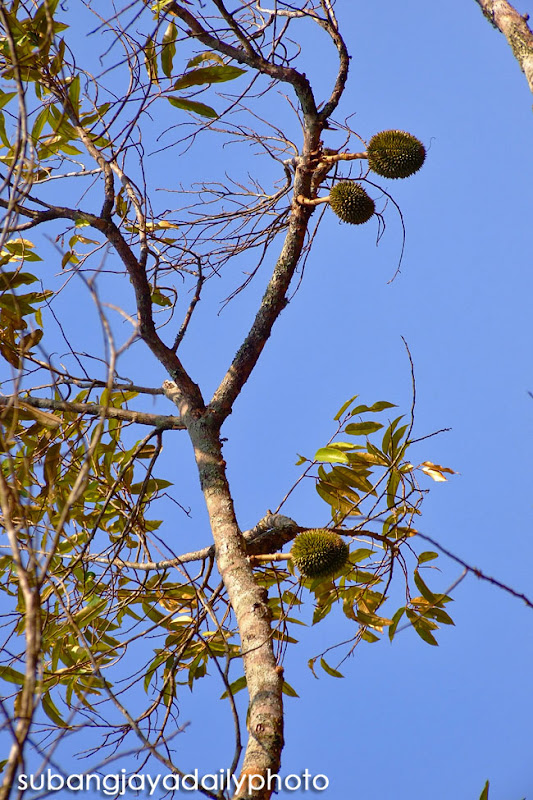
Durian fruits on tree.

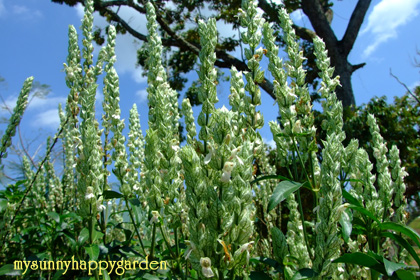
I don't know what's the name of this herb. We pruned this plant. I like the beautiful flowers.

Added on 30 Apr 2009. Found on Malaysian Herbs website that this plant is called Ekor Kuching. USAGE : The root of this herb is considered useful for healing bone fractures and for the treatment of urinary diseases, tumors, oedema, burning sensation and difficult breathing. The leaves are considered antiseptic and are used to treat gonorrhoea. The root is credited with aphrodisiac properties; its paste, mixed with water, is used as an antidote for snakebite. Its decoction is prescribed for cough, chiles and fevers. The roots and pods are used in the treatment of anal prolapse in infants, and pods are used to treat sore throat in childrenParts Used: Roots, leaves and pods.


Misai Kucing


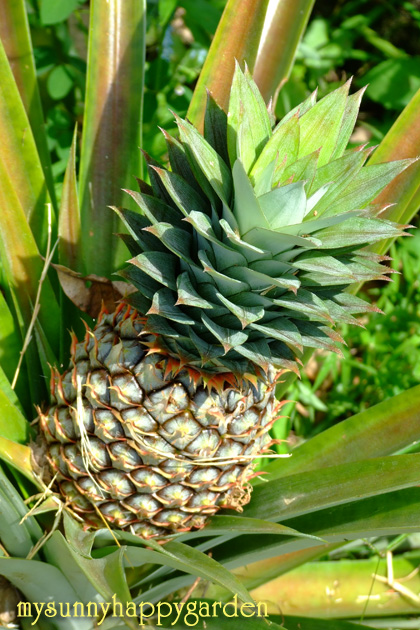
Pineapple


Silhoutte of a durian tree


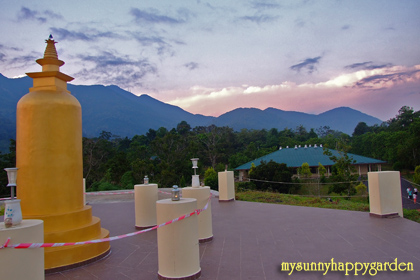
The beautiful view of Gunung Ledang from the stupa site


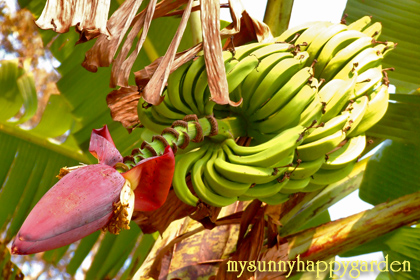
Banana fruit


Mulberries


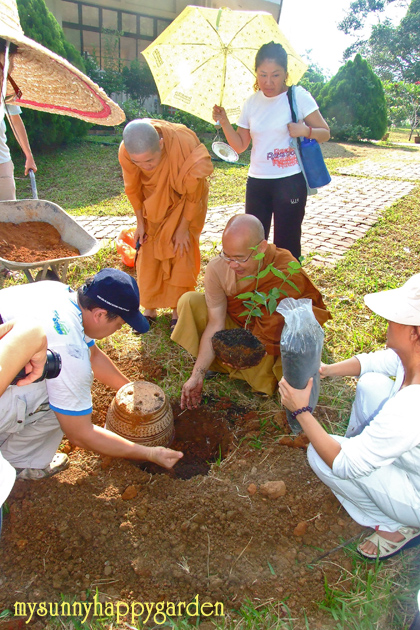
All of us planted a plant together with Rev. Mahinda & Sis. Sumangala. The sapling of this fragrant flowering plant was brought back by Rev. Mahinda from Sarnath, India (which was the deer park where the Buddha preached his first sermon).


A video of us planting a plant at Alokarama during the recent Green Thumb Workshop.

Friday, April 24, 2009

Basil (My Herbs Garden Series)

I love cooking with basil. I first had the taste of basil when dining in a Thai restaurant. Basil is widely used in Thai cuisine, e.g. in green curry, basil fried chicken/squid.

It is not easy to find basil being sold in the herbs section of our supermarkets. Even in the Subang Jaya SS15 wet market, it was not sold until recently where one stall carries this herb. I used to drive down to PJ Old Town Market to buy it. It was quite a hassle to cook with basil until I got my own plant. My several early attempts in planting basil failed as they wilted due to too much of heat from the sun.

Two months ago, my close friend from Bukit Rimau, Chooi, who has many basil plants growing in her garden gave me two big bunch. These two bunches grow very well and lush. I am so happy that these days I could just go over to my garden and pluck some basil whenever I need them.

Two weeks ago, I got a pot of lemony-fragrant basil from Danny who owns a booth selling potted plants in Amcorp Mall's Flea Market. Please see the photo below. I am not sure what variety of basil is this.


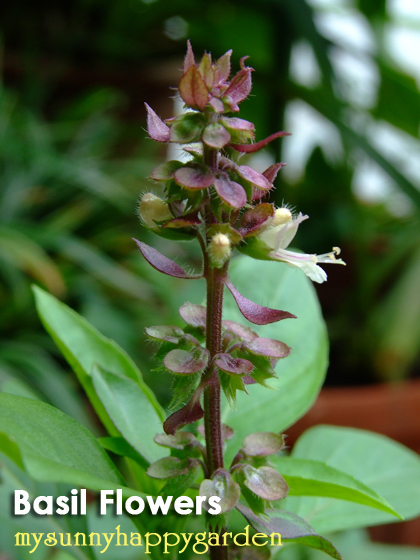
Photo #1 & #2: Basil - Type 1 (I think it is called Thai Basil)

From my past failures in planting basil, I learnt that basil likes well-drained soil and not too much of direct sun. I keep my basil plants under the shade of my taller plants. This protect it from the scorching heat that we are experiencing lately. I also water it twice a day ~ in the morning and evening. Sometimes when the sun is too hot, I find my basil leaves drooped. A quick watering is required in order to save the plant from wilting.


Basil can be planted from seeds or stem-cutting. Keep the seeds found from the flowers. Sow them on the soil. In no time, you can find small shoots growing.


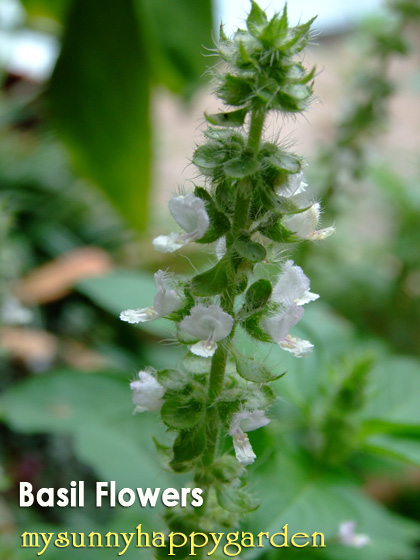
Photo #3 & #4: Basil - Type 2 (I think it is called Lemon Basil)
Its leave has a tinge of refreshing lemon smell. Please correct me if I am wrong.


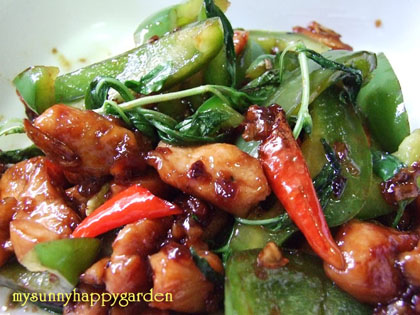
Thai Basil Chicken is one of my favourite recipes, using basil. It is a simple dish to prepare. I am glad to share the recipe of this dish. Try it out and let me know if you like it.

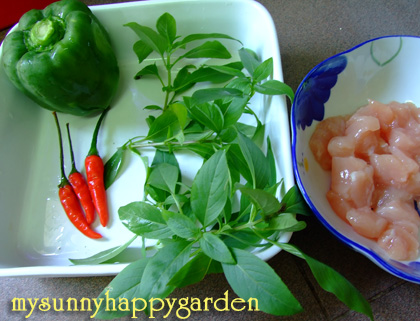
Some of the ingredients used for Thai Basil Chicken

Ingredients: A few bunches of basil, bird's eye chillies, capsicum, diced chicken fillet, minced garlic, corn flour, soya sauce, oyster sauce, sugar, chicken powder. (I don't use measurements in my cooking. Just an estimate of the quantity, depending on your tastebud.)


Method:

1. Mix diced chicken fillets with soya sauce, oyster sauce, sugar, chicken powder & corn flour & marinade for 20 mins.

2. Slice capsicum. Cut bird's eye chillies into two.

3. Heat up oil. Put in bird's eye chillies. Fry till fragrant. Add garlic. Continue frying. When garlic is fragrant, add marinated diced chicken fillets. Fry till chicken is fragrant and the sauce caramelized (due to the added sugar). The chicken will taste better this way. Then add capsicum slices. Do not fry too long as to retain the crunchiness of the capsicum slices.

4. Lastly, add basil. Remove and serve.

The steam from the basil chicken fogged my camera lens.

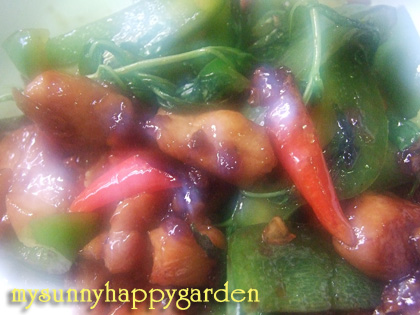
Delicious Thai Basil Chicken

---------------------------------------------

My archive collection of an article on Basil - King of Savoury Herbs by Dr. Chew Boon Hock, taken from Flavours magazine, Issue May - June 2003. Please click on the photos below to link you to a bigger image.


LinkWithin

Related Posts Widget for Blogs by LinkWithin
Custom Search