
My first purchase is a plant that we locally called Mas Cotek. Scientifically it is known as Ficus Deltoidea. What struck me when I first saw it in Shah Alam's Farmers Market was the ornamental fruits on this plant. They look so beautiful. The plant was sold at the price of RM35 at the Farmers Market. Fortunately I got this pot at RM10. The price was a good bargain and you know me, I have done my research before I finally paid for it.
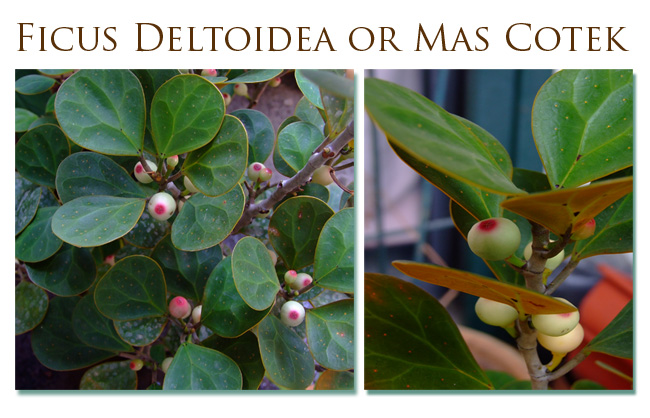
I was told by the vendor that the whole Mas Cotek plant can be consumed for health purpose. Boil the cleaned & sun-dried leaf, stem and root with water. Consume it. This helps for diabetic patient. From the Wikipedia, I found more usage of this herbs:
Mas Cotek is a small perennial herb, growing up to about 2m tall. The different shapes of the leaves represent different varieties some having a rounded shape and others having an elongated egg shape. The color at the top of the leaf is shining green while underneath, the surface color is golden yellow with black spots in between the leaf veins. Mas Cotek plant species are male and female. The leaves of female species are big and round in shape, while the male species are small, round and long in shape.Mas Cotek plants grow wild in eastern Peninsular Malaysia and it is popular among traditional medical practitioners. The trees can be found in the jungle in Kelantan, Terengganu, Sabah, Sarawak and Kalimantan.
Mas Cotek, also known as "mistletoe fig", has been scientifically researched by two local institutions, the University of Malaya and the Malaysian Planting Research Institute (MARDI). Research results show that Mas Cotek possesses five (5) active components which are required by the human body, namely flavonoids, tannins, triterpenoids, proanthocyanins and phenols. These active components have been shown to assist in human memory and are used by doctors to treat patients with disabilities in concentration.
Traditionally used as a postpartum treatment to help in contracting the muscles of the uterus and in the healing of the uterus and vaginal canal, it is also used as a libido booster by both men and women. The leaves of male and female plants are mixed in specific proportions to be taken as an aphrodisiac. Among the traditional practices, Mas Cotek has been used for regulating blood pressure, increasing and recovering sexual desire, womb contraction after delivery, reducing cholesterol, reducing blood sugar level, treatment of migraines, toxin removal, delay menopause, nausea, joints pains, piles pain and improving blood circulation.
The 2nd plant that I bought is a grafted Ylang-Ylang, also known as perfume tree. The ylang-ylang (pronounced ee-lang ee-lang) is a medium to large sized tree producing yellow flowers with long trailing petals and a strong aromatic scent. The sweet smelling flowers are used in perfumes, such as Chanel No. 5.
A Ylang-Ylang germinated from seeds can grow to be a tall tree as tall as 60 feet high. But grafted ones will remain as a small tree or shrub (see Ylang-Ylang at Alokarama) that grows up to 6 ft. tall and it starts blooming when the plant is only 1 to 1½ feet tall. That's why I choose the grafted plant.
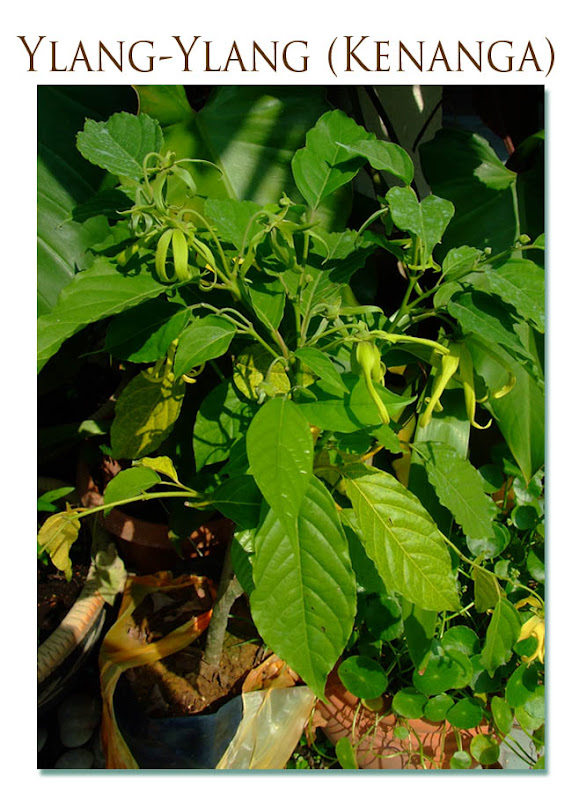
Some more information about Ylang-Ylang that I found on the internet:
The Ylang-Ylang cultivation requires:
Light: Provide full sun to ensure better flowering.
Water & Humidity: Water the Ylang-Ylang plant daily for the first 2-3 weeks after you plant it. Then regular sprinkler irrigation will be sufficient. Cananga is a rainforest tropical tree that thrives best in a high-humidity environment.
Fertilization: Fertilize the plant with one-half dose of blooming-grade balanced fertilizer at least once a month during the growth period to encourage blooming.Pests: The tree is practically pest-free. No special treatments are usually required to keep it healthy.
Sometimes, creative gardeners who lack room in their gardens train the plant into a shrub. Such a compact Ylang-Ylang will still provide wonderful perfumed flowers year round. The procedure must be started as early as on 8-10 inch seedling by pinching the very top point of growth. Don't wait until the seedling becomes too woody, or when you plant in the ground, the tree will sprout up a long stem. If done in time, trimming can create a nice shrubby look.
The last plant that I got was a Roselle. After reading about Roselle from the other fellow bloggers site, I am very tempted to plant it.
Roselle is also known as Hibiscus Sabdariffa. Roselle is usually propagated by seed but grows readily from cuttings. The latter method results in shorter plants. The plant prefers a permeable soil, preferable light (sandy), medium (loamy) and heavy (clay) soils with humus rich fertile and well-drained soil. The plant prefers acid, neutral and basic (alkaline) soils. However, it will adapt to a variety of soils. It cannot grow in the shade and must be kept weed-free. It requires moist soil. It will tolerate floods, heavy winds or stagnant water.
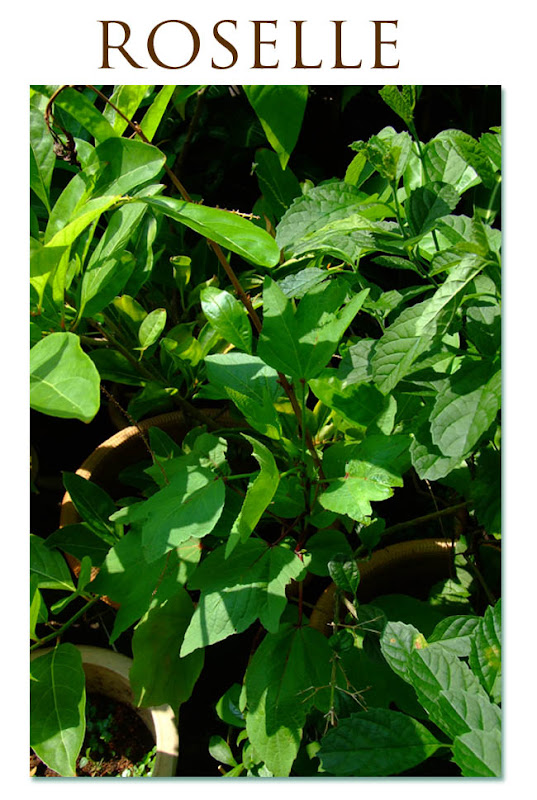
The fresh calyx (the deep red outer whole of the flower) can be eaten raw in salads, or cooked and used in making jellies, soups, sauces, pickles, puddings. The calyx is rich in citric acid and pectin and so is useful for making jams & jellies. It is also used to add a red colour and to flavour to herb teas (Sudan Tea), and can be roasted and used as a coffee substitute. A refreshing and very popular beverage can be made by boiling the calyx, sweetening it with brown sugar. See BangChik & Kak Dah's My Little Vegetable Garden for their roselle plants.
My aplogies for the loooooooong posting today. As I researched for information on these plants that I newly acquired, I thought it would be good to share the information here with all.


