Showing posts with label article. Show all posts

Sunday, June 7, 2009

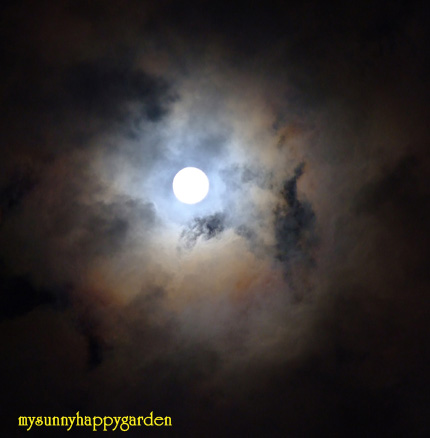
Moon Gardening

Ever heard of Feng Shui & Gardening? Found this an interesting read and wanna share with all of you.


Sunday March 8, 2009
Moon Gardening
VASTHU SASTRA BY T.SELVA


The ancient rhythms of Nature are still the most effective.

WANT to have an awesome garden or a great harvest? Follow the phases of the Moon, as the ancients did.

In Vasthu Sastra, besides ensuring the land is of the proper shape, and plants and object placed correctly, choosing the right time to plant is also important in creating harmony. Because, just as the Moon is known to influence the human body and behaviour and the tides of the sea, it also has an effect on planting, nurturing, and harvesting.

The Moon’s different phases can stimulate root and leaf growth and spur seeds to sprout faster. Flowers bloom larger and brighter, fruits grow juicy, and gardening generally becomes more effective in certain phases. Till today, farmers in India observe Moon stages when planting to ensure fruitful yields.

To explain it very simply, the Moon’s gravitational pull tugs on the surfaces of Earth’s oceans, causing high and low tides; due to the positions of the Sun, Moon, and Earth at various points, the highest tides occur during the new Moon phase, and when the Sun and Moon are lined up with Earth.

Vasthu Sastra precepts say that the Moon also causes moisture to rise in soil, which encourages growth. Studies have shown that the highest amount of moisture in the soil occurs when the Moon is in its full phase; this is also when – as tests have proven – seeds will absorb the most water.

The Moon has four phases, each lasting about a week: new, first quarter, full, and last or third quarter. “Waxing” is the term describing the Moon on its way from new to full, and “waning”, when it is moving from full to the last quarter; the latter is also known as the dark of the Moon.

New Moon: Seeds should be sown during this phase because the new Moon helps seeds to swell and burst easily. This is when ocean tides are highest – and it is also when gravity pulls water up in soil. This factor, along with the increasing moonlight, creates balanced root and leaf growth.

Plants that should be planted in this phase: cereal crops, like maize and barley; leafy greens like asparagus, lettuce, cabbage, cauliflower, broccoli, and tomatoes.

Crops that prefer the first quarter, a few days before the full Moon: beans, melons, and pepper.

Full Moon: The Moon’s influence on water is at its strongest during this phase; this is the best time to harvest, and the best time to do it is before midday. This is also the best phase in which to do any baking because the Moon’s influence improves yeast and encourages dough to rise.

Waning Moon: It is best to plant root vegetables such as carrots, onions, groundnuts, and potatoes in this period.

Dark of the Moon: The decreased gravitational pull during this phase offers the best time to prune, do maintenance work, and prepare the ground for planting.

Some farmers who plant according to Moon phases also follow match the phases with their Zodiac cycles, but this can be too complicated for home gardeners. If you’re interested in this aspect, you should consult an astrologer.

Vasthu Sastra also points out that tall plants should be placed in the southern and western quadrants of the plot of land, and vegetables should ideally be planted in the northern and eastern quadrants.

Also, it is recommended that the plot should be one level, or higher in the south-west quadrant and lower in the north-east portion.


About the author:
==============

T. Selva, The Star’s Sunday Metro Editor, has spent years researching and writing about the ancient Indian science of construction, better known as ‘Indian feng shui’.

He is the first disciple of 7th generation Vasthu Sastra Master Yuvaraj Sowma from Chennai, India.

Friday, April 24, 2009

Basil (My Herbs Garden Series)

I love cooking with basil. I first had the taste of basil when dining in a Thai restaurant. Basil is widely used in Thai cuisine, e.g. in green curry, basil fried chicken/squid.

It is not easy to find basil being sold in the herbs section of our supermarkets. Even in the Subang Jaya SS15 wet market, it was not sold until recently where one stall carries this herb. I used to drive down to PJ Old Town Market to buy it. It was quite a hassle to cook with basil until I got my own plant. My several early attempts in planting basil failed as they wilted due to too much of heat from the sun.

Two months ago, my close friend from Bukit Rimau, Chooi, who has many basil plants growing in her garden gave me two big bunch. These two bunches grow very well and lush. I am so happy that these days I could just go over to my garden and pluck some basil whenever I need them.

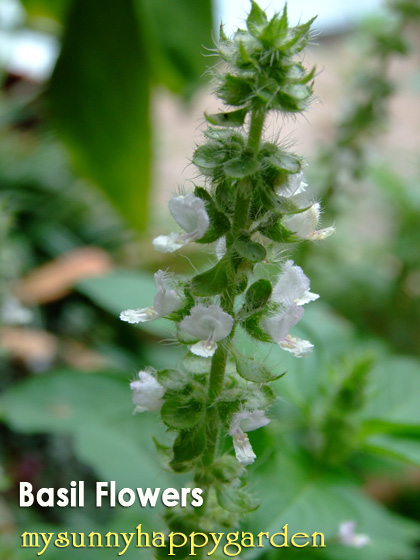
Two weeks ago, I got a pot of lemony-fragrant basil from Danny who owns a booth selling potted plants in Amcorp Mall's Flea Market. Please see the photo below. I am not sure what variety of basil is this.

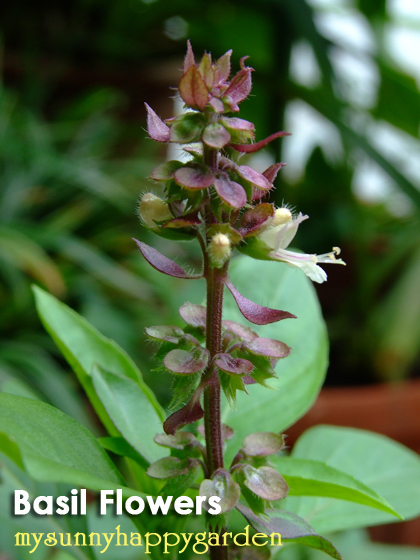
Photo #1 & #2: Basil - Type 1 (I think it is called Thai Basil)

From my past failures in planting basil, I learnt that basil likes well-drained soil and not too much of direct sun. I keep my basil plants under the shade of my taller plants. This protect it from the scorching heat that we are experiencing lately. I also water it twice a day ~ in the morning and evening. Sometimes when the sun is too hot, I find my basil leaves drooped. A quick watering is required in order to save the plant from wilting.


Basil can be planted from seeds or stem-cutting. Keep the seeds found from the flowers. Sow them on the soil. In no time, you can find small shoots growing.


Photo #3 & #4: Basil - Type 2 (I think it is called Lemon Basil)
Its leave has a tinge of refreshing lemon smell. Please correct me if I am wrong.


Thai Basil Chicken is one of my favourite recipes, using basil. It is a simple dish to prepare. I am glad to share the recipe of this dish. Try it out and let me know if you like it.

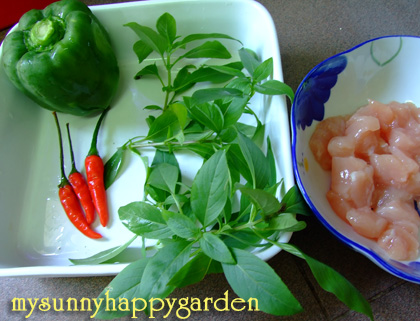
Some of the ingredients used for Thai Basil Chicken

Ingredients: A few bunches of basil, bird's eye chillies, capsicum, diced chicken fillet, minced garlic, corn flour, soya sauce, oyster sauce, sugar, chicken powder. (I don't use measurements in my cooking. Just an estimate of the quantity, depending on your tastebud.)


Method:

1. Mix diced chicken fillets with soya sauce, oyster sauce, sugar, chicken powder & corn flour & marinade for 20 mins.

2. Slice capsicum. Cut bird's eye chillies into two.

3. Heat up oil. Put in bird's eye chillies. Fry till fragrant. Add garlic. Continue frying. When garlic is fragrant, add marinated diced chicken fillets. Fry till chicken is fragrant and the sauce caramelized (due to the added sugar). The chicken will taste better this way. Then add capsicum slices. Do not fry too long as to retain the crunchiness of the capsicum slices.

4. Lastly, add basil. Remove and serve.
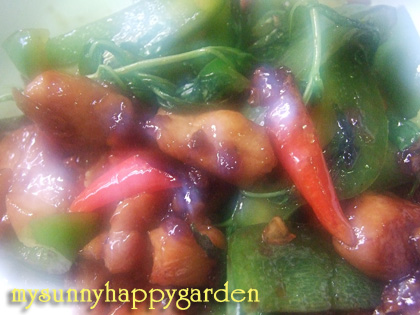
The steam from the basil chicken fogged my camera lens.
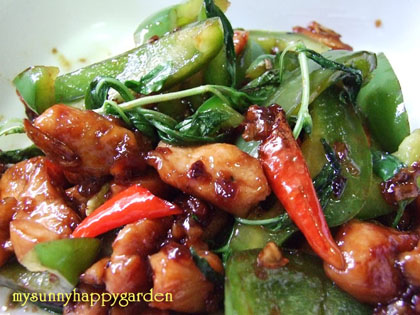
Delicious Thai Basil Chicken

---------------------------------------------

My archive collection of an article on Basil - King of Savoury Herbs by Dr. Chew Boon Hock, taken from Flavours magazine, Issue May - June 2003. Please click on the photos below to link you to a bigger image.


Thursday, April 9, 2009

Why I Started a Gardening Blog?

Like my mom, I love gardening. I have been gardening and everytime when I am faced with problems such as stunted growth, pests attack, tips to improve my plants, I tend to be at a lost. This was until I stumbled upon some gardening blogs by fellow Malaysians yesterday. The blogs have inspired me to start my own blog on gardening. This will encourage me to improve my gardening knowledge and at the same time, share with others photos of plants growing in my garden. I also plan to post articles on gardening that I have collected over the years.


To kickstart this blog, I am glad to share this article that I have written about my garden to our local New Straits Times press when it used to have a column on gardening. This is an article on how my garden was started. Hope you enjoy reading!


LinkWithin

Related Posts Widget for Blogs by LinkWithin
Custom Search