
Something to tickle your funny bones today! This may have happened to many of us before!!
I would also like to wish all Muslims friends Selamat Hari Raya!! May the festive occasion be joyful and filled with peace and love.

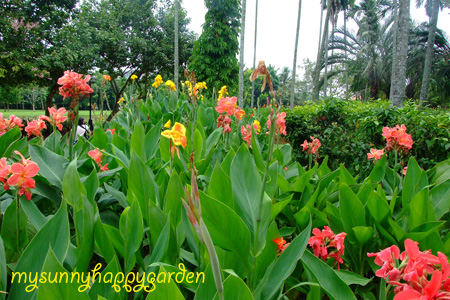
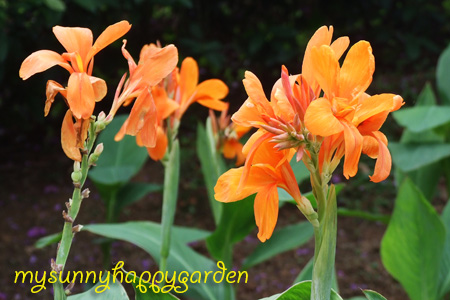
Cannas are native to Tropical America, where there are about 25 wild species. Canna generalis, commonly known as garden cannas, are hybrids that come in many different colours. Most cannas propagate by underground creeping stems (rhizomes), while others propagate by hard, bead-like seeds.

Cannas gained popularity as a garden plant in the mid-19th century, when the first hybrids were produced in France (1848). Since then, hundreds of hybrids displaying many shades of red, yellow, orange and pink flowers have been produced.

According to Professor R.E. Holttum in Gardening in the Lowlands of Malaya 1953): "There are very few plants in Malayan gardens that give really solid masses of colour... cannas are very important, as few other plants, whether herbaceous or woody, can compare with them in producing massed colour effects."

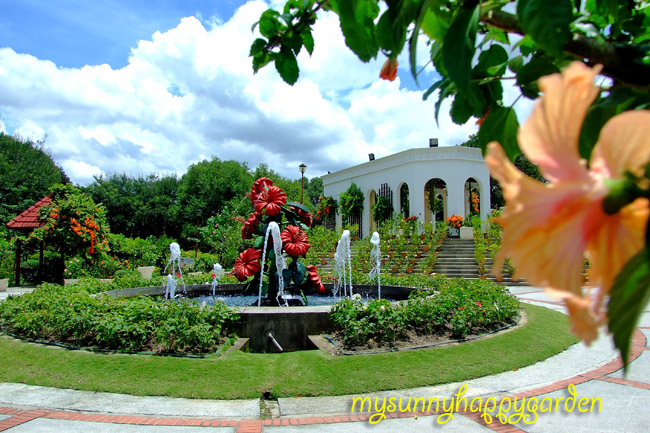
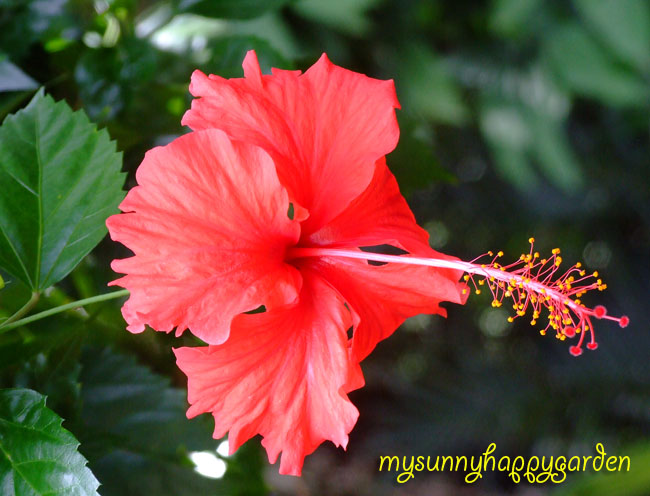
Hibiscus Rosa-sinensis, the Queen of Tropical flowers is Malaysia's National flower, locally known as Bunga Raya. It is also known as shoe flower. It belongs to the cotton family Malvaceae and consists of 300 species. It is a shrub that can grow to a height of 3 to 5 meters. Its flower is among the world's largest and most beautiful bloom growing to 25cm in diameter. The flowers are very colourful and come in various sizes, shapes and forms.
At the Hibiscus Species Collection section of the garden, we saw hibiscus that are grown as 'single planting' ~ like a tree. Many a time our local hibiscus are grown in the form of hedge or border shrubs or screen. The 'single planting' hibiscus are rather tall, as can be seen in the photo below. I noticed that our local council, MPSJ, has recently started landscaping the dividers on our streets with such hibiscus.
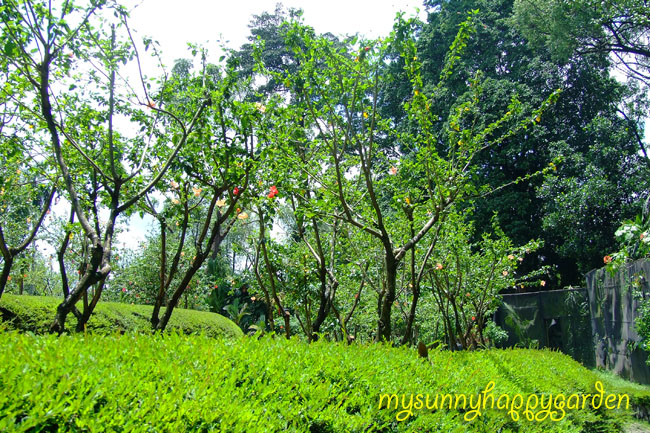
Hibiscus can be planted from seeds or propagated vegetatively by stem cutting and marcot (aerial rooting).
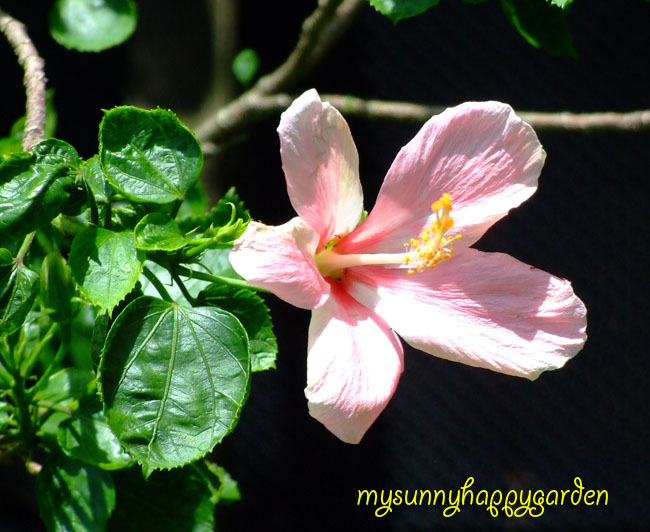
An unusual pink hibiscus
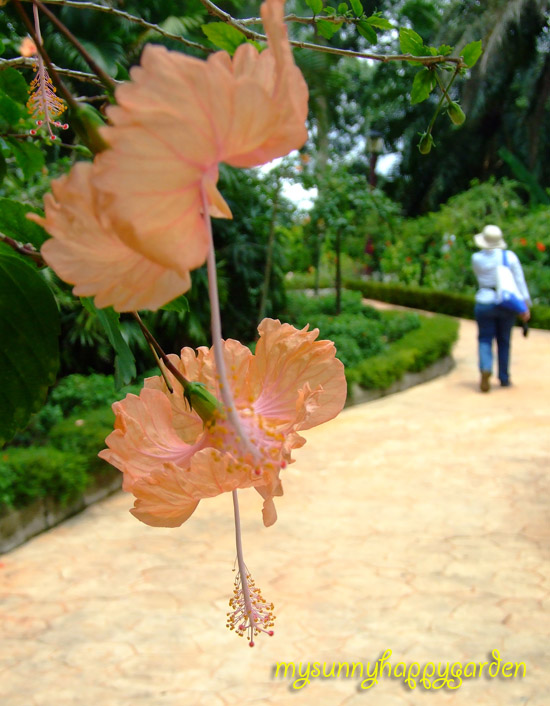
A coral-coloured hibiscus
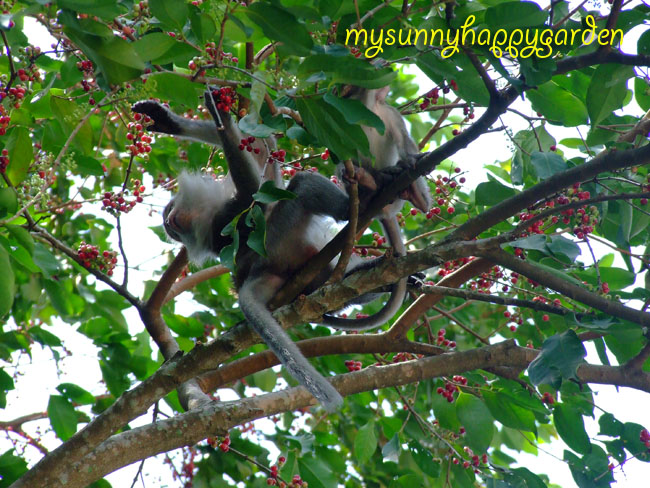
We saw some monkeys busy plucking fruits from a tree. When we were kids, we used to have this tree behind my parents home in Melaka. We simply called it 'cherry tree' as the fruits look like little red cherries. Birds love the fruits. Would anyone be able to tell me what is the right name for this tree?
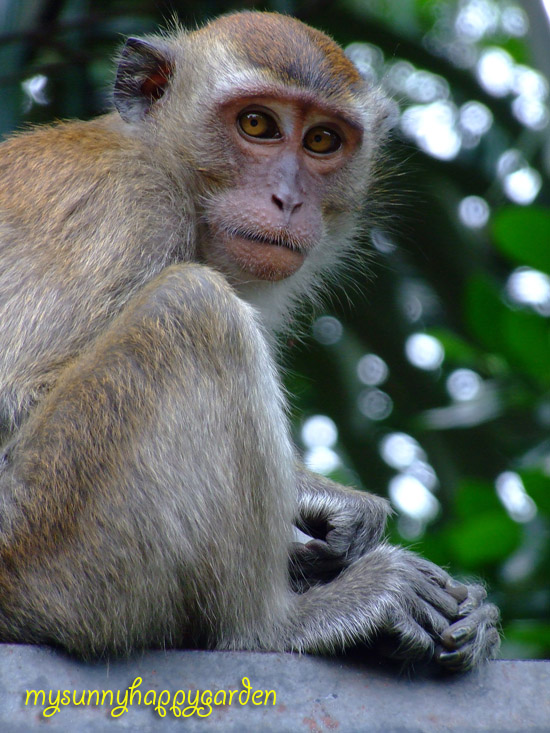
Below is my best monkey shot so far!! This little fella just stared right into my lens and turned me into a happy photographer. I had a great time taking his shots. Oddly, the monkeys over here aren't afraid of humans at all! They were chasing and pulling each other, totally disregard our presence.
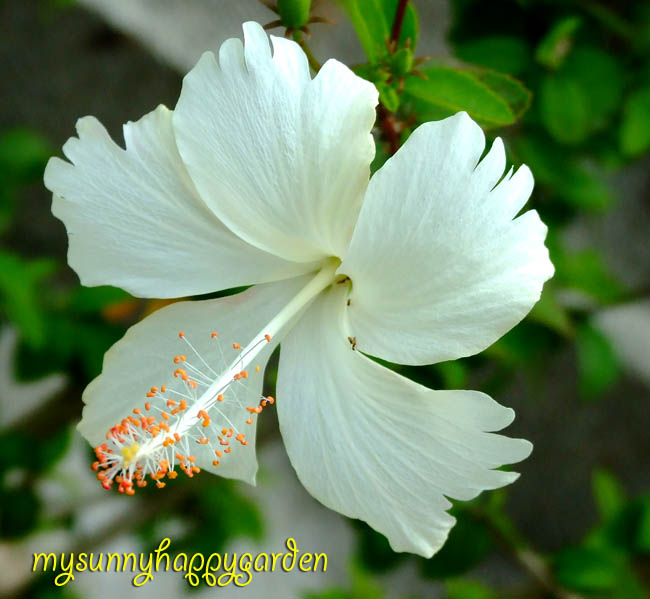
An uncommon white hibiscus.
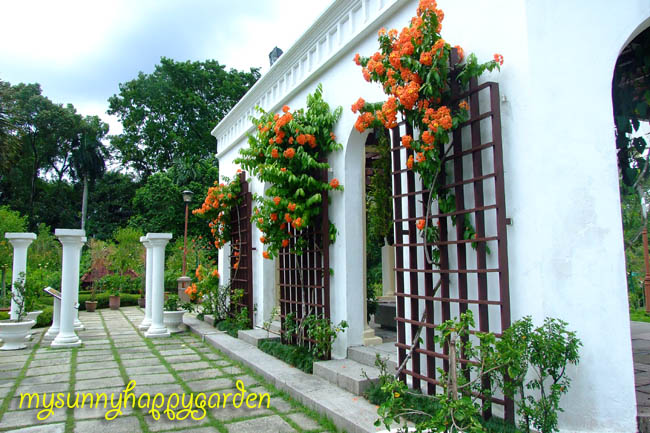
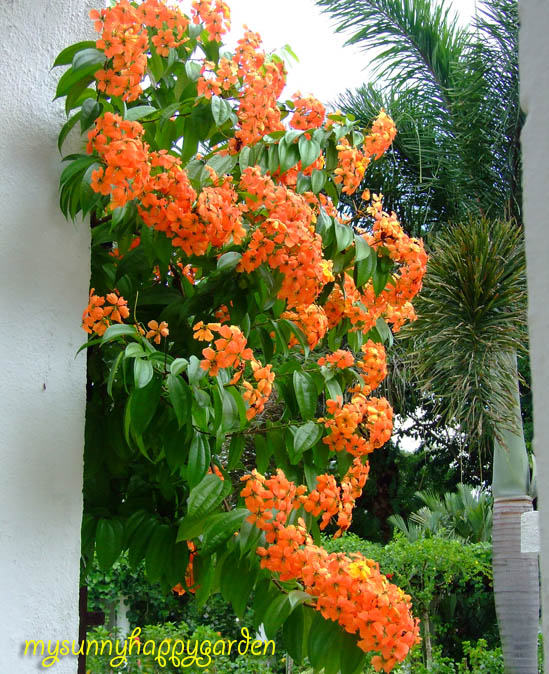
I like this vibrant orange-coloured flowers that are climbing over the pergola. They are so attractive. Again, I don't know the name of it.
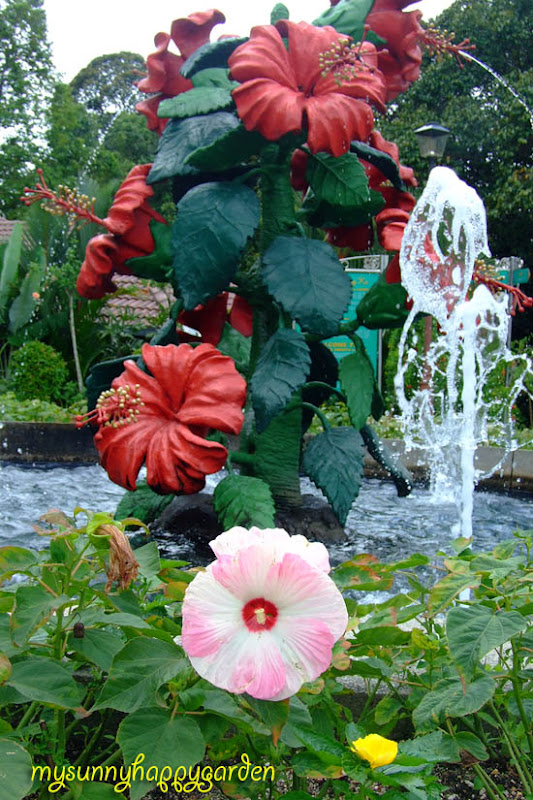
A huge hybrid hibiscus in white and pink. It was bigger than my palm.
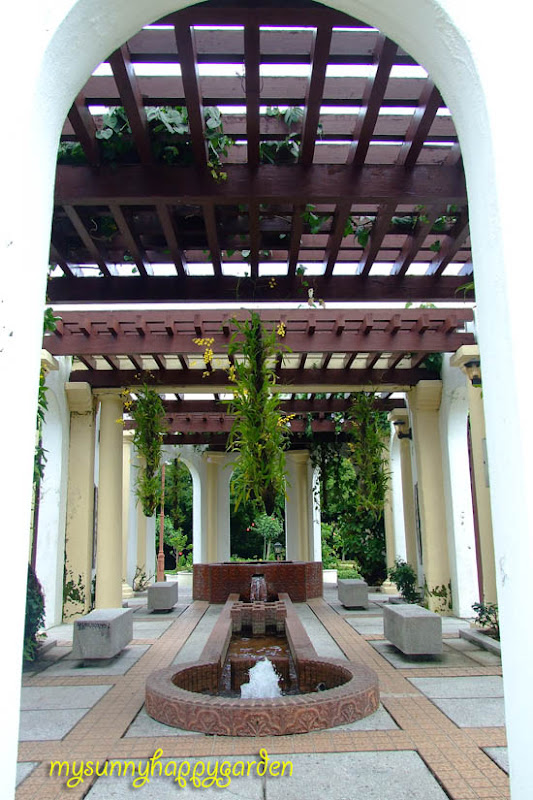
Golden shower orchids hanging from the top of the pergola
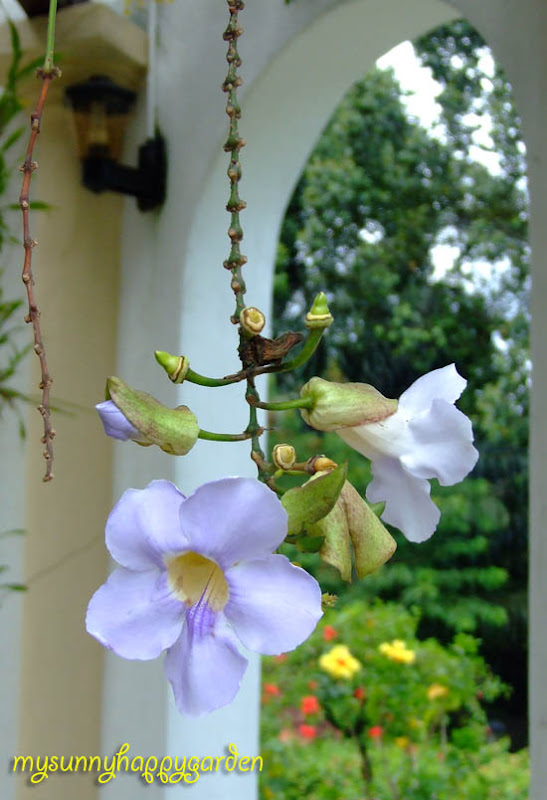
Tumbergia Bengal hanging from the pergola
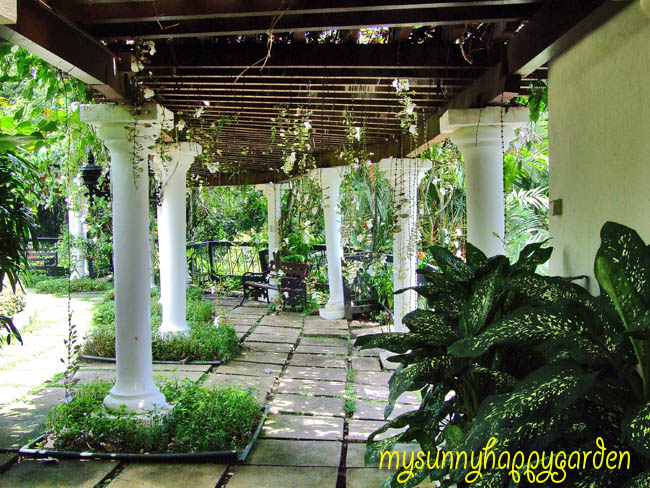
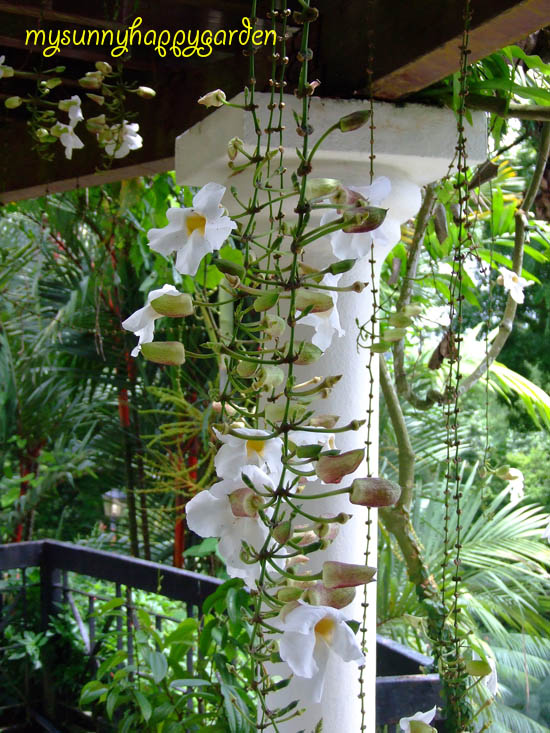
Beautiful structures in the Hibiscus Garden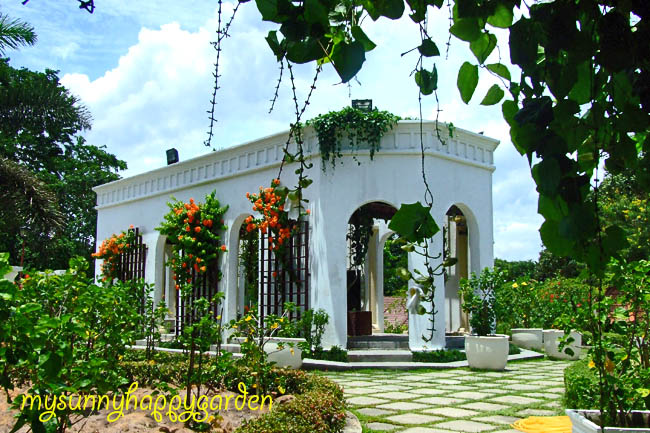
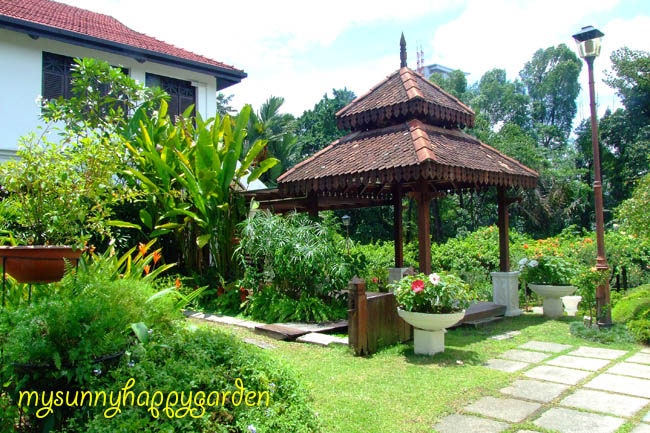
Entrance to the Garden Gallery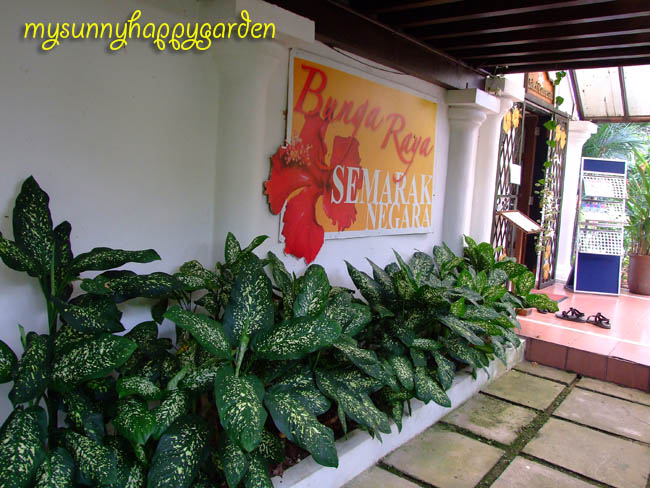
Interestingly, I learnt from the gallery that hibiscus floral plan is always five. Thus, every hibiscus comes with 5 petals, 5 stigmatic lobes, a 5-celled ovary, 5 teeth each on the calyx and the epicalyx. However, multiple petals forms also exist.

